Close
Search
Searching...
No results
    Reference

    Resource-economy on a grand scale: Adelholzener chooses the Contipure Bloc P

    You need to accept cookies to use this functionality.
    By installing a new dry-aseptic line, the mineral water bottler Adelholzener Alpenquellen has geared up to meet two major challenges: saving water while also covering rising demand for drinks on the go.
    • For its new line, Adelholzener has for the first time chosen dry-aseptic technology.

    With its latest line, Adelholzener Alpenquellen has embarked on a paradigm shift in terms of technology. This article tells the story of a project that took an entirely different course from the one originally planned – and has hit the bull’s eye precisely for that reason. 

    Non-returnable PET bottles account for a relatively small share in Adelholzener’s portfolio but they are carefully placed. For example, the soft drinks of the “Active O2” brand, which contain an extra portion of oxygen instead of carbon dioxide, are available exclusively in lightweight non-returnable containers with sports caps. At the more traditional end of the spectrum are the 0.75-litre returnable glass bottles, whose distinctive embossed mountain relief pays homage to the origins and home of Adelholzener mineral water: the Bavarian Alps. In addition, the company also offers its waters and soft drinks in returnable PET containers. It was an intentional strategic decision to go for this diverse range of packaging, as Manuela Schreiner from Corporate Communications explains: “We don’t want to make the decision for the people buying our products. We want them to be free to choose their drinks in exactly the package that best suits their preferences, their lifestyle or any specific occasion.” 
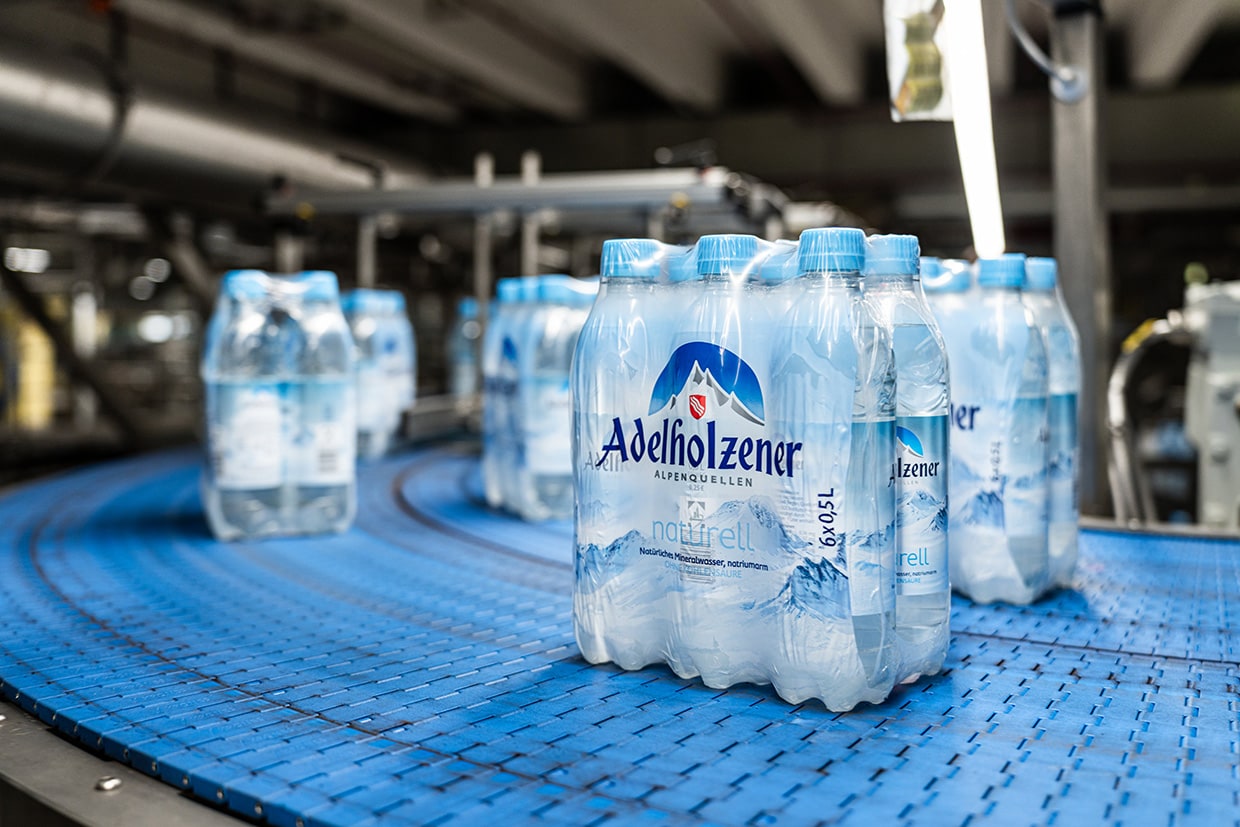
    Image 55288
    In addition to returnable glass and PET containers, Adelholzener’s packaging mix also includes non-returnable PET bottles.

    The resultant logistic requirements are by far outweighed by the benefits that this approach provides for Adelholzener because it enables the water bottler to respond flexibly to consumers’ behaviour patterns, like the currently rising demand for drinks on the go. The slump in sales that followed the introduction of a mandatory deposit in Germany was rather short-lived. There is no trace of it today – quite the contrary. “Thanks to the nationwide collection system and a recycling quota currently running at about 98 per cent, consumers can reach for the handy single-use PET bottle without having a guilty conscience,” explains Manuela Schreiner. “For the on-the-go market, in particular, the lightweight easy-to-handle containers are the perfect choice, all the more so because they feature a convenient drinking cap that can be opened and closed with one hand.” 

    Foresightfully planned 20 years ago

    Fact is: The on-the-go market has been booming, so much so that existing capacities were no longer sufficient to cover demand. Fortunately – and that’s yet another of Adelholzener’s salient characteristics – the company had taken timely precautions, laying the foundations for the latest expansion as early as 20 years ago. “Even back at the time when we planned the last previously installed non-returnable-PET line from Krones, which went into operation in 2006, we’d already factored in some additional space for a second line,” explains Johann Niedl, the department head responsible for non-returnable-PET lines at Adelholzener, adding: “The basic idea was to enable us to install a second identical line at need, thus saving planning time.” 

    In mid-2024, the time had come: A new line had to be erected as fast as possible – although the requirements involved had meanwhile changed. “Back in 2006, our planning was based on a 25,000-bph line,” says Niedl. “But that output would in 2024 no longer have been sufficient. So we had to modify our original plan and increase the line’s speed to 36,000 containers per hour.” There was one snag, though: The space available remained the same. So the team had to figure out how to accommodate the new line in a space that was originally intended for a substantially smaller variant. 

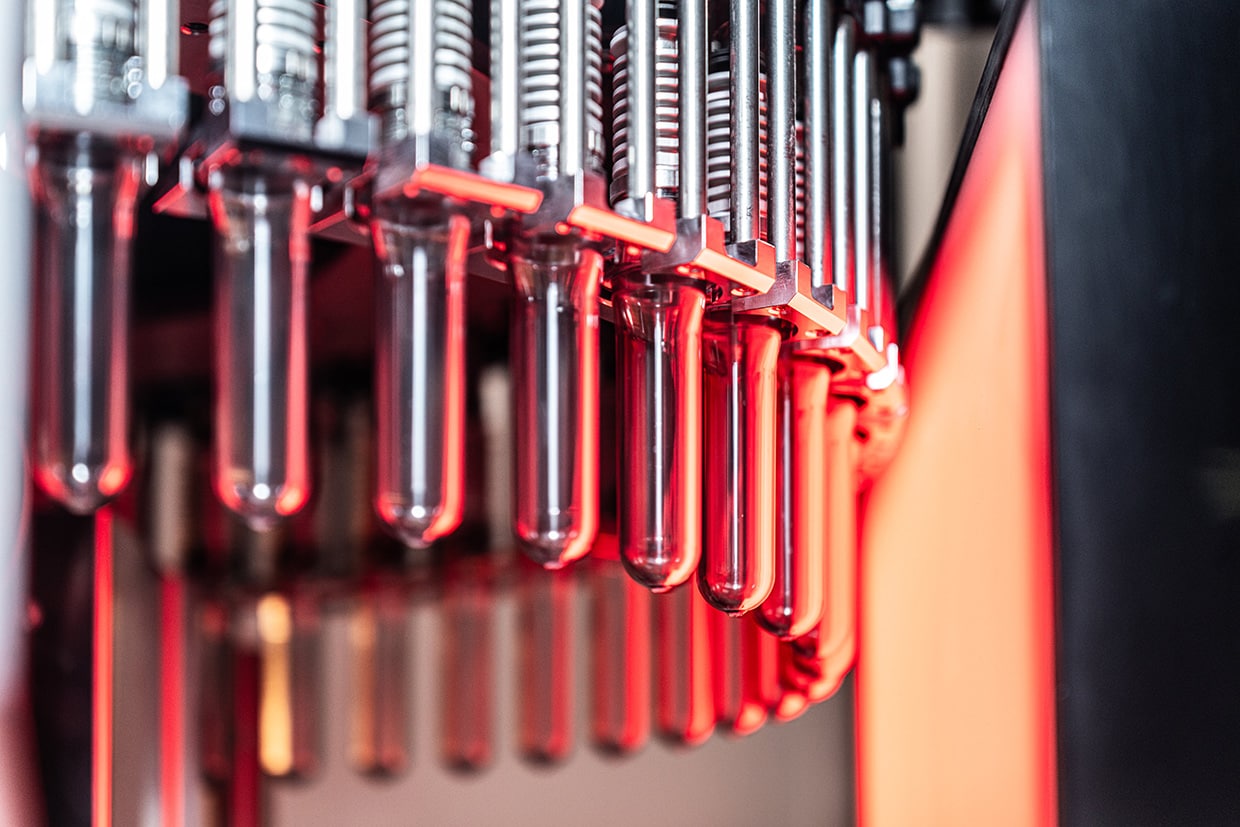
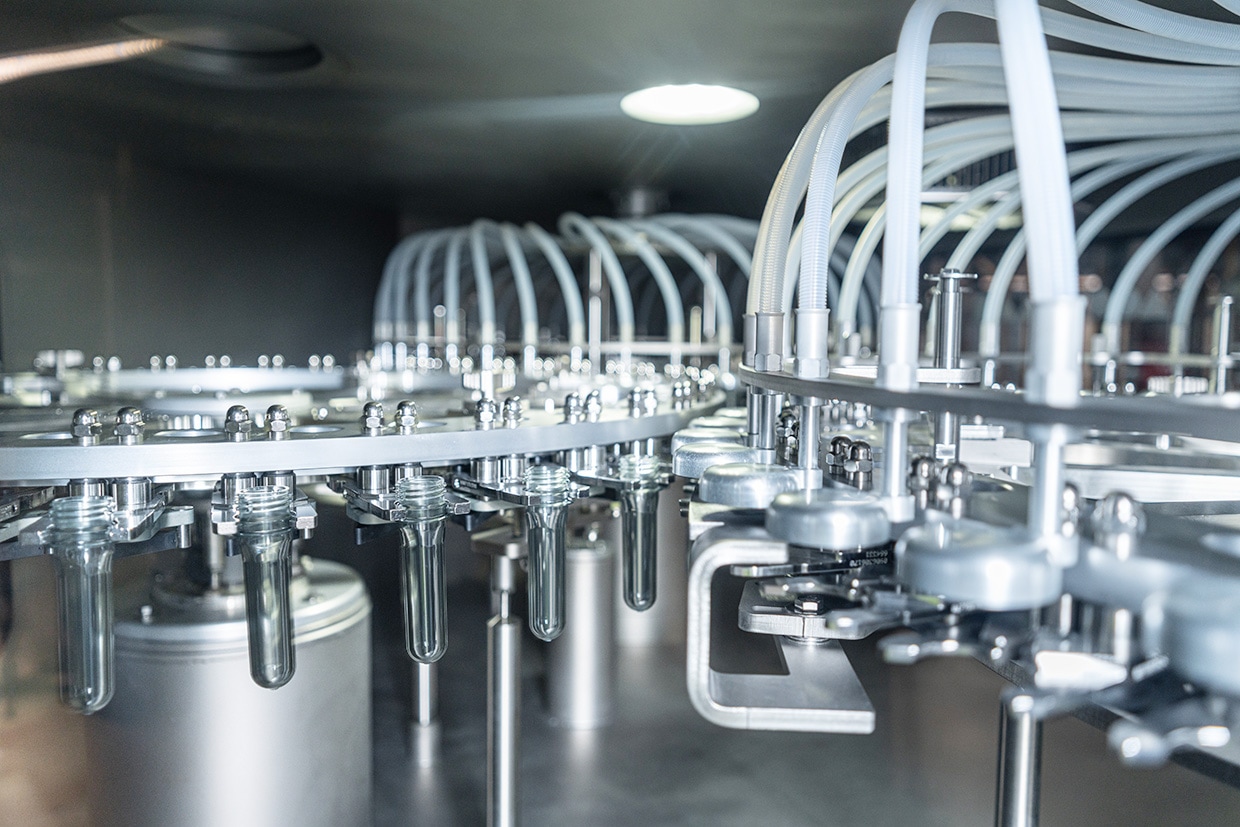
    Since the past 20 years had also seen a fair bit of technological progress, Krones suggested to go for a paradigm shift: the Contipure Bloc P. In contrast to the process used in the existing wet-aseptic line at Adelholzener, this system does not sterilise the blow-moulded bottles but the preforms. That step is performed directly in the stretch blow-moulder, in a compact unit located between the infrared oven and the blowing module, which takes up substantially less space than the bottle rinser used in a wet-aseptic system. 


    Every millimetre counts

    Did that mean the space problem was solved? “Theoretically yes. But we had our doubts to start with, wondering whether everything would really work that way in actual practice,” says Johann Niedl, laughing. In order to dispel any such doubt, a realistic 3D layout was created for the entire line (including platforms and peripherals). “The Krones team handled this with painstaking diligence, scanning our hall umpteen times from all possible angles,” says Niedl, clearly impressed. “After we’d checked the finished plan, we knew for sure that the line would definitely fit into the space available – even though there are several places where quite literally every single millimetre counts.” 

    Image 55290
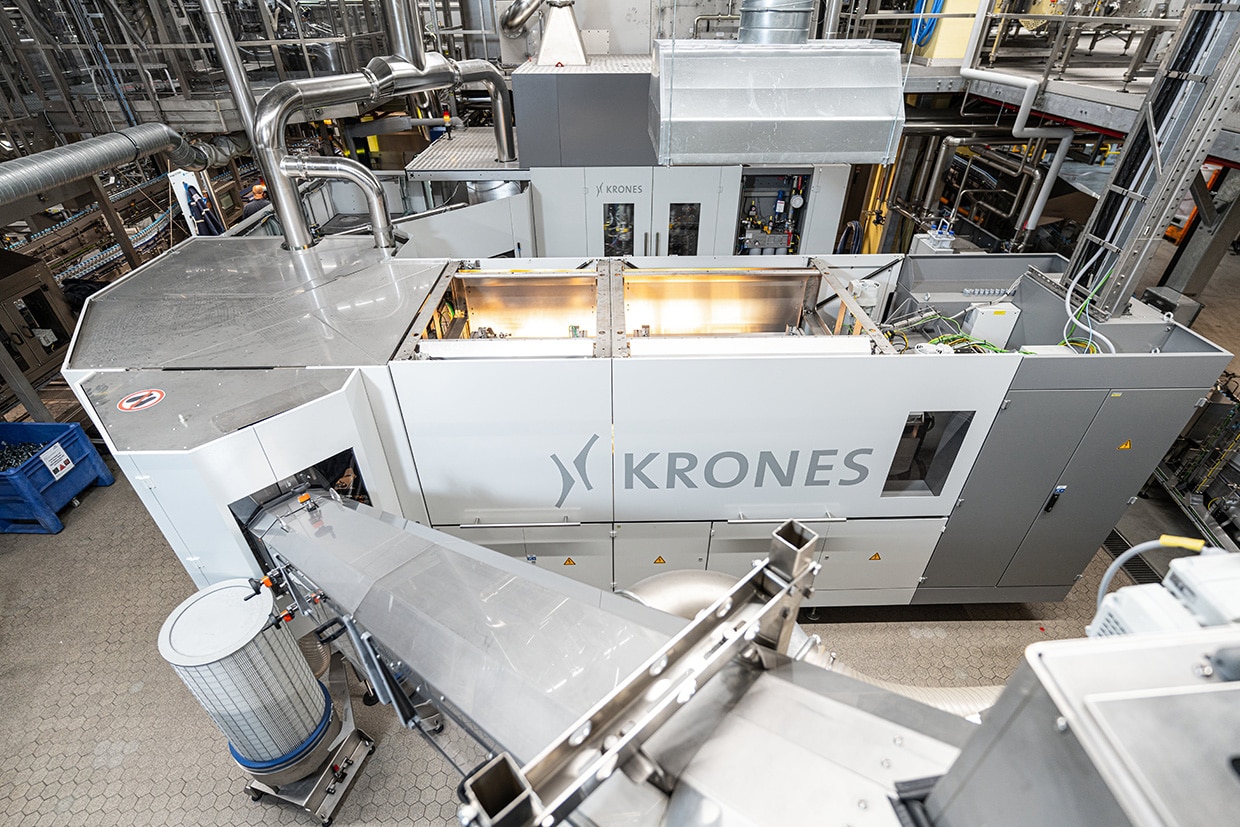
    The Contipure Bloc P was fitted into the hall with down-to-the-last-millimetre precision.

    The order was placed with Krones in February 2024, a little less than seven months after the project kicked off at Adelholzener. The next process steps were performed in the same expeditious way. “Erection in our plant started on 7 January 2025, and the first saleable merchandise ran off the line on 15 April,” says a manifestly satisfied Johann Niedl. At peak times, about 95 people from a wide range of specialisms were working on site. A total of around 100 truck deliveries had to be coordinated. Scrupulously precise sequential planning was imperative, not least in view of the space constraints on site. The new line is hardly more than an arm span away from the existing non-returnable-PET line. And even so, installation of the one line was not to interfere with operation of the other. “That line was operating at full capacity, and we simply could not afford any standstills,” says Niedl. 

    The best line project by far

    So the wet-aseptic line was kept running in three-shift operation throughout the entire erection and installation period. And yet there was not a single workplace accident during all that time. “We didn’t even have to put on a simple plaster,” says Johann Niedl, adding: “It was downright fun watching the progress made, watching everything dovetailing neatly.” To give an example, he describes the erection of a 400-square-metre steel platform: While it was still being extended into the open space on one side, the first units of the line were already being installed at its other end. 

    The erection period linked up seamlessly to the commissioning and validation phase. Due to Adelholzener’s extensive beverage portfolio, the latter went on until mid-October 2025. Firstly, the line fills both still and carbonated waters into 0.5- and 1.0-litre bottles. And secondly, the company wants to keep its options open for also processing spritzers and sugary drinks if needed. 

    As tricky as it was accommodating the new line on just 1,200 square metres plus a steel platform, the tight layout has definitely turned out to be an advantage in daily operation. “Legwork is minimised, and from almost any point you can see how things stand everywhere in the line. And so the operators are happy to run it,” says Johann Niedl. What’s more, Adelholzener has used Krones production kit for decades. “Our staff are familiar with the technology. You see, a second line for non-returnables is directly next to the new one. Needless to say, that makes for synergies, especially in the dry end where some of the machines are identical models in both lines.” 


    Targeted familiarisation with a new technology

    Getting to grips with dry-aseptics constituted a significantly greater challenge for the staff, who had so far worked only with wet-aseptics. “The Contipure technology was virgin territory for us, and it’s very different from what we used to know,” says Niedl. That is why Adelholzener’s team started familiarising themselves with the new technology long before the new line was started up. The people working in production were present in some phases of commissioning, and a team of instructors from the Krones Academy trained them directly on the new machines. “We’d do it exactly the same way with the next line. The instructors from Krones did a great job – the feedback we got from our production team was unanimously positive,” says Johann Niedl. 

    Looking back, the department head for non-returnable PET has no doubts: Introducing dry-aseptics was definitely the right decision because the new line has a lot of advantages, particularly in one respect that is essential for Adelholzener: resource-economy. The company is focused on sustainability and continuously analyses the consumption figures of all its production lines. “We’re keeping a close eye on consumption and optimise processes wherever possible,” emphasises Johann Niedl. 

    Savings in the double-digit percentage range

    The energy-optimised shrink tunnel, which was developed specifically at Adelholzener’s request, is vivid proof of that. It has meanwhile become a standard product in Krones’ portfolio and plays an important part in ensuring that the new line’s general energy consumption is 22 per cent lower than that of the existing wet-aseptic line. When the 0.5-litre bottle is processed, the energy savings even exceed 40 per cent. “That’s precisely what we appreciate about Krones: their flexibility, their commitment to innovation. They’ve always had an open ear for our ideas,” is how Johann Niedl sums up his experience working with Krones. 

    The reductions achieved in the consumption of process water are even more striking. “Whereas the old line consumes 6.7 cubic metres per hour, the new one makes do with as little as 0.2. That means we’re saving over six cubic metres of water per hour, just by using a different sterilisation medium: hydrogen peroxide instead of sterile water,” explains Johann Niedl. 


    A dream come true: a robot

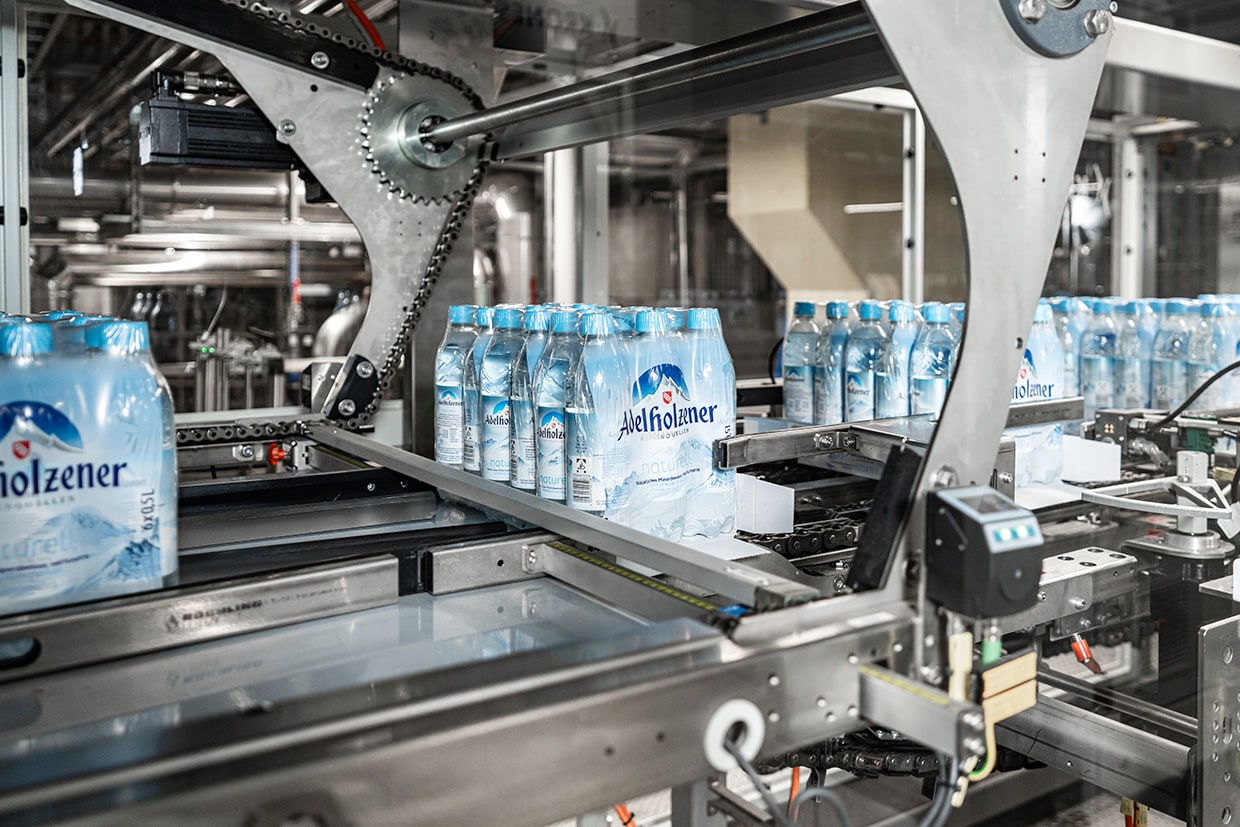
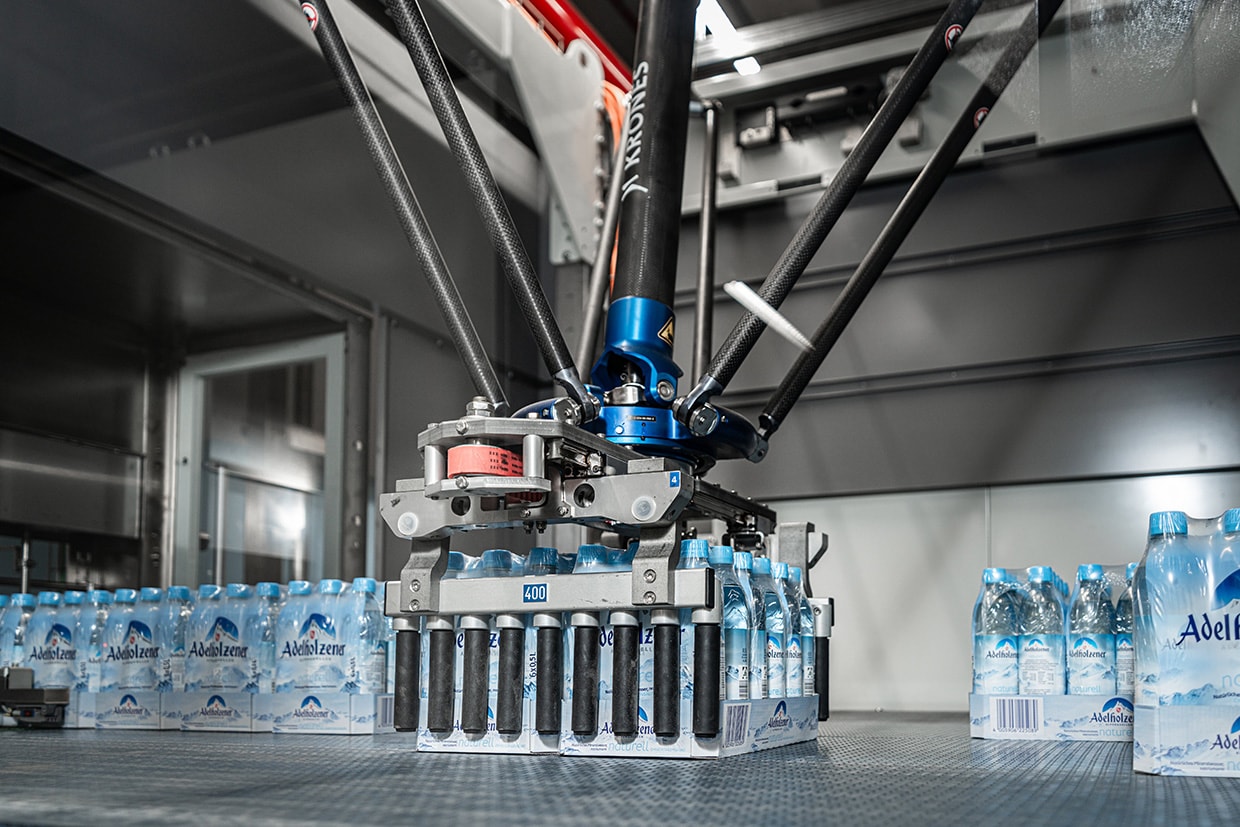
    In the line’s dry end, Adelholzener largely opted for the proven technology already used in the existing line for non-returnables, with one exception: In addition to two Variopac Pro packers and a Modulpal Pro 1A palletiser, a Robobox T-GS was installed as well. That is a robot system for pack grouping, which would not in fact have been necessary for the packaging portfolio currently processed.

    This decision is yet another proof of the company’s foresight: “The Robobox will enable us to swiftly implement any future changes in the packaging mix. We thus remain maximally flexible in the long run, so we can respond to the market’s new needs with great accuracy,” explains Johann Niedl and adds with a wink: “Besides, we’ve always wanted to have a robot in our production – and that was the perfect opportunity.” 

    Image 55295
    Thanks to the Robobox T-GS, Adelholzener will be able to flexibly translate any future trends on the packaging market into hands-on reality.

    Want to read more Krones stories?

    You can easily send a request for a non-binding quotation in our Krones.shop. 

    Request new machine
    kronesEN
    kronesEN
    0
    10
    1