Close
Search
Searching...
No results
    Innovation

    Saving water and energy in beer filling lines

    You need to accept cookies to use this functionality.
    27. May 2026
    8:15 min.
    Dry vacuum pumps are a real game changer for evacuating glass bottles.
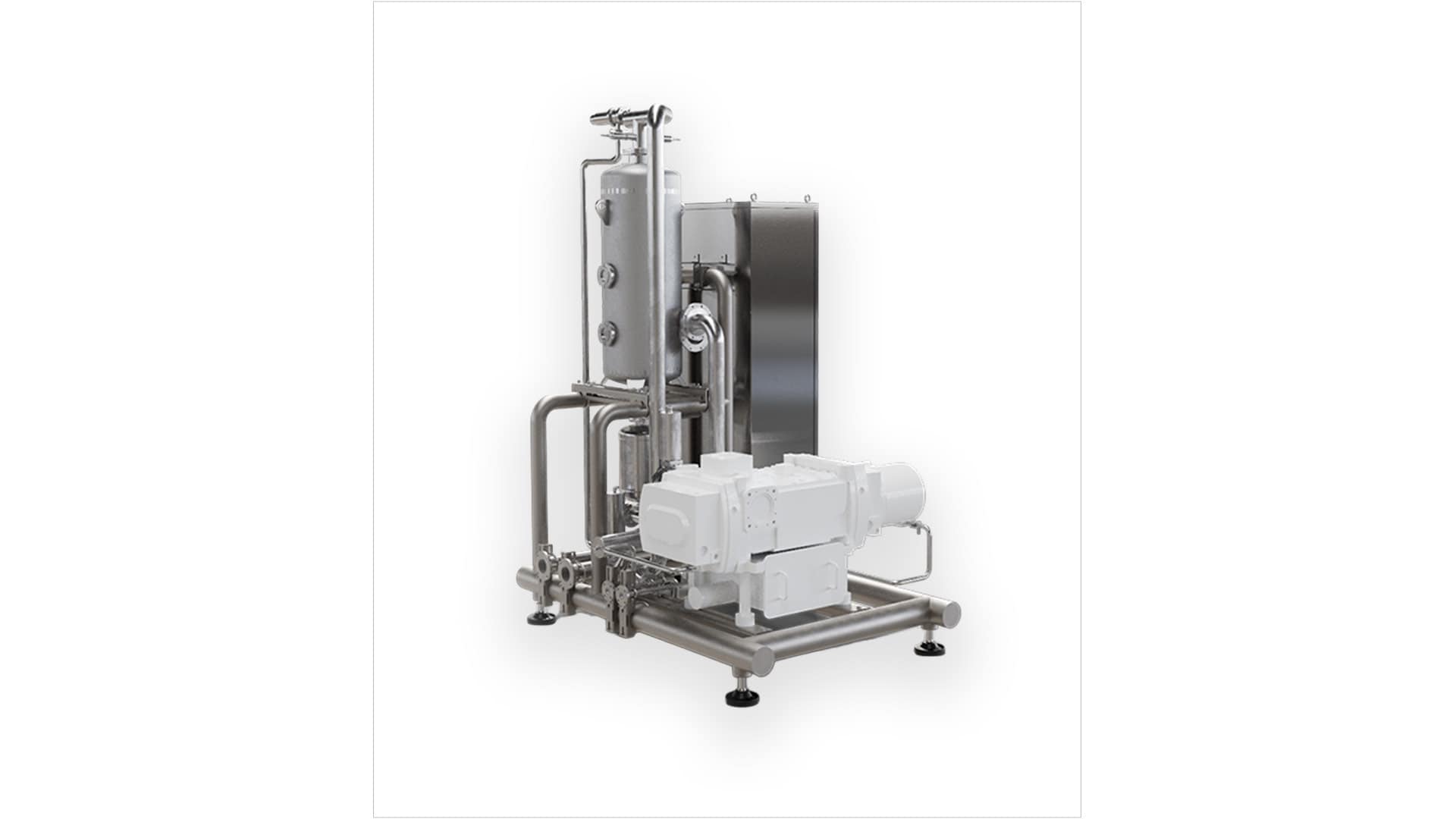
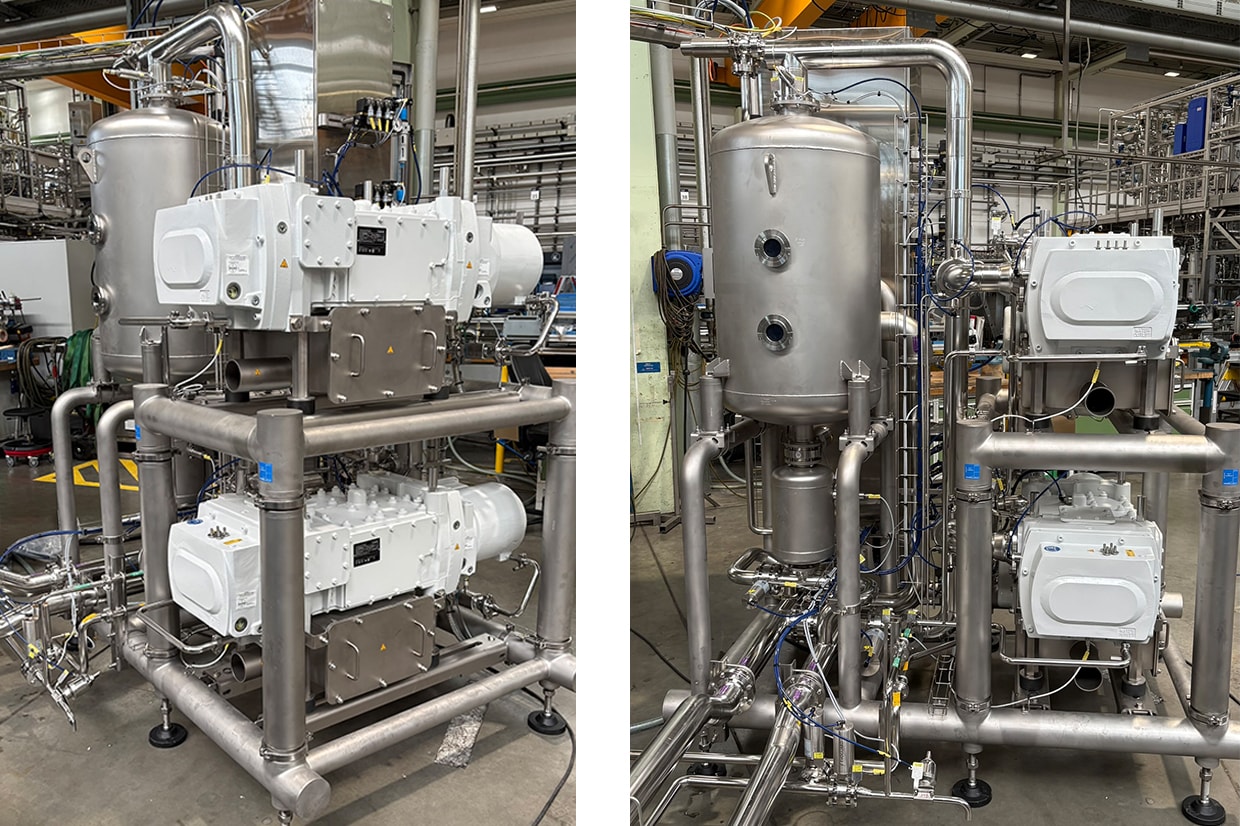
    • The new more efficient pump unit, consisting of a dry vacuum pump, a foam seperator, a control cabinet and the requisite valve technology.

    Oxygen is purged from the glass bottles before they are filled with beer. For this purpose, Krones has developed a solution featuring dry vacuum pumps. The advantages of this pump type over the commonly used liquid-ring version are that it requires almost no water and reduces power consumption by about a quarter.

    Every brewery knows that low total packaged oxygen (TPO) is proof of top beer quality. So they take all sorts of measures to minimise oxygen pick-up, such as evacuating the glass bottles prior to filling. Until now, liquid ring vacuum pumps have mostly been used for that. However, dry vacuum pumps could do the job a lot more efficiently because they need 25 per cent less power and reduce water consumption to almost zero. Dry-vacuum technology has long been well-established in other fields of the food industry, so why not use it in beer filling, too? The challenge here is that tiny amounts of beer remain in the filling valve after filling. These residues are drawn into the pump when the next bottle is evacuated. Whereas liquid ring pumps can take a fair bit of that soiling, dry vacuum pumps can’t. For a long time, there was no viable solution to this. In the early 2000s, Krones joined the ranks of those trying to find one – but to no avail. However, tinkerers never really give up on a problem they’ve been unable to solve. And since pumps have steadily evolved and saving water has become more important than ever, Krones decided to give it another try. This time, they succeeded.

    No beer foam in the pump

    Taking a brief look at the different working principles of the two pump types is well worth the effort because it helps understand the solution developed and the advantages it provides: 

    In the liquid ring pump, an off-centre impeller rotates inside a water-filled cylinder. The water forms a ring that seals off the pump’s interior from the outside. That water seal simultaneously serves as cooling liquid. Any beer residues from the air-liquid mix drawn in during evacuation are flushed out with the sealing water. This process requires a huge amount of water because the cylinder is continuously topped up with fresh water. 

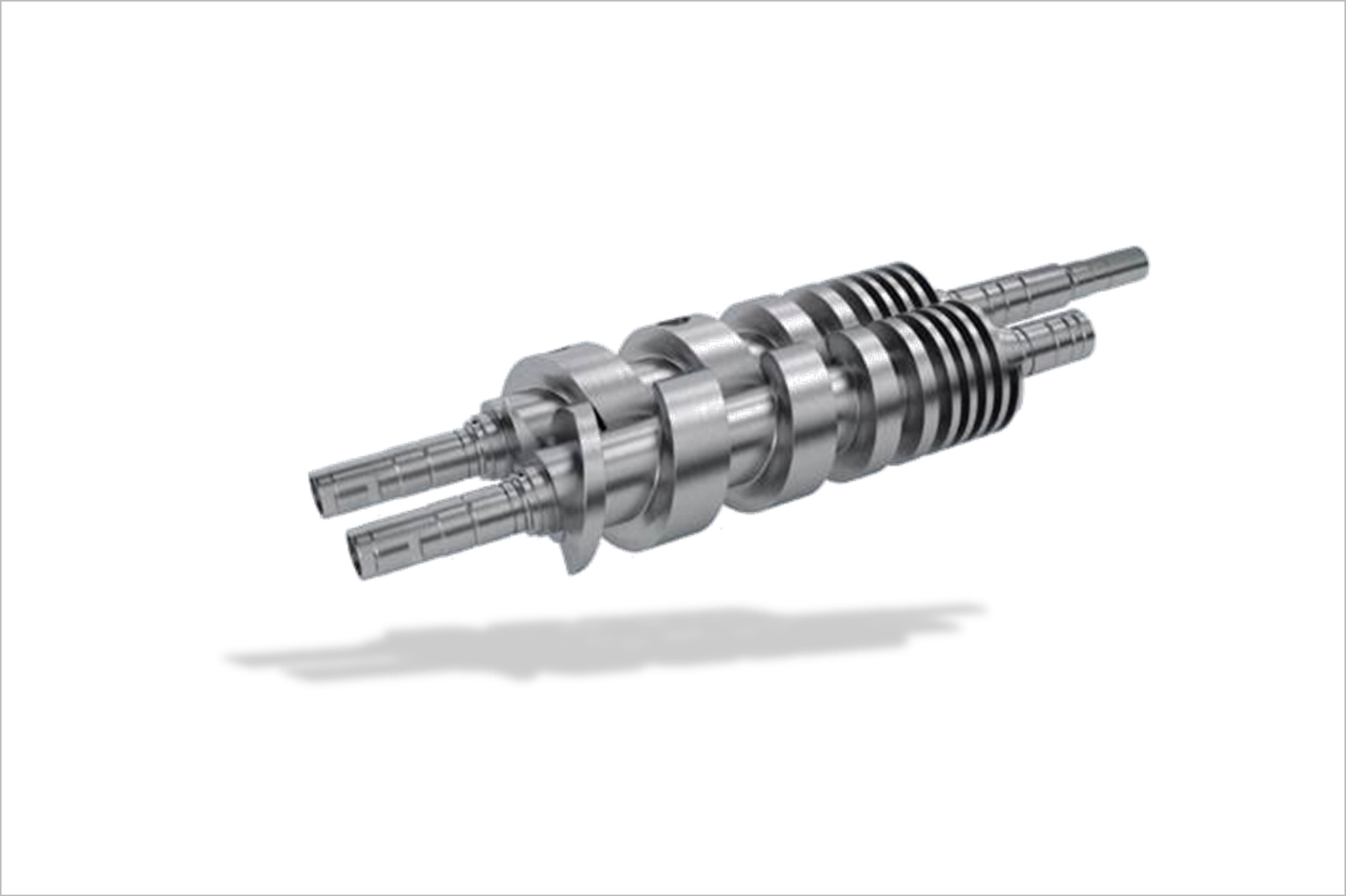
    In the dry vacuum pump, two spindle screws rotate in opposite directions, with only a very small gap between them. The pump’s dry interior heats up to about 140 degrees Celsius during operation and must be cooled from outside. Beer foam would be a genuine problem here because it would dry onto the hot spindle screws, causing the pump to stall because there is only a minimal gap between them. 

    Article 54230
    In the dry vacuum pump, two spindle screws rotate in opposite directions. Image credits: Leybold

    The solution developed by Krones sets to work precisely here: It features a foam separator that reliably prevents any beer residues getting into the pump. To achieve this, the separator imparts a whirling motion (similar to a tornado) to the air-liquid mix drawn into the pump. That cyclonic action causes gaseous constituents to rise to the top where they are extracted. The centrifugal force causes any liquids like beer residues to be thrown sideways, where they hit the housing’s wall and are drained off downward.

    Übersicht Aggregat
    Foam separator with safety valve
    Drainage tank, foam seperator
    Vacuum/CIP from filler
    CIP return to filler
    Control cabinet with frequency converter and solenoid valves
    Dry vacuum pump
    Mounting frame for small footprint
    The foam separator is an essential component of the pump unit, creating a vortex that reliably removes any beer residues.

    Liquid ring pumps that keep the sealing water in a closed circuit (as opposed to using a continuous flow of fresh water) likewise feature foam separators. In such a closed circuit, beer residues will accumulate in the water, turning the pump into a “giant whisk”, as Hannes Deubzer from Technical Product Management Retrofits at Krones puts it. The “What not to do” photos he showed at the project launch meeting impressively demonstrate what that might look like. In dry vacuum pumps, however, even the smallest amounts of beer foam are a problem, and the previous separator technology proved unable to solve it. That is why Krones has upgraded it further, thus paving the way for their use in beer filling.

    For new machines and retrofits alike

    So Krones’ portfolio now also includes a unit featuring a dry vacuum pump for filling oxygen-sensitive products available as an optional extra, consisting of pump, foam separator, control cabinet and the requisite valve technology, all of it mounted on a compact-size frame. For the pump, Krones is trusting in technology developed by the Cologne-based company Leybold. All other components are made by Krones.


    An important stipulation, which should actually go without saying, is that the entire system meet in full the stringent hygiene standards applying for beverage filling. In order to ensure that, the piping and the foam separator have been integrated into the filler’s CIP circuit. The pump itself is separated from the latter because it could be damaged by the strong cleaning agents used. The dry vacuum pump is water-cooled from outside. If fresh water is used for this purpose, it can even be re-used because it does not get into the pump’s interior and is therefore not contaminated. The obvious place for re-use is the bottle shower downstream of filling. Alternatively, the pump can be equipped with its own cooling system. Frequently, breweries already have a cooling system which the pump is then connected to.

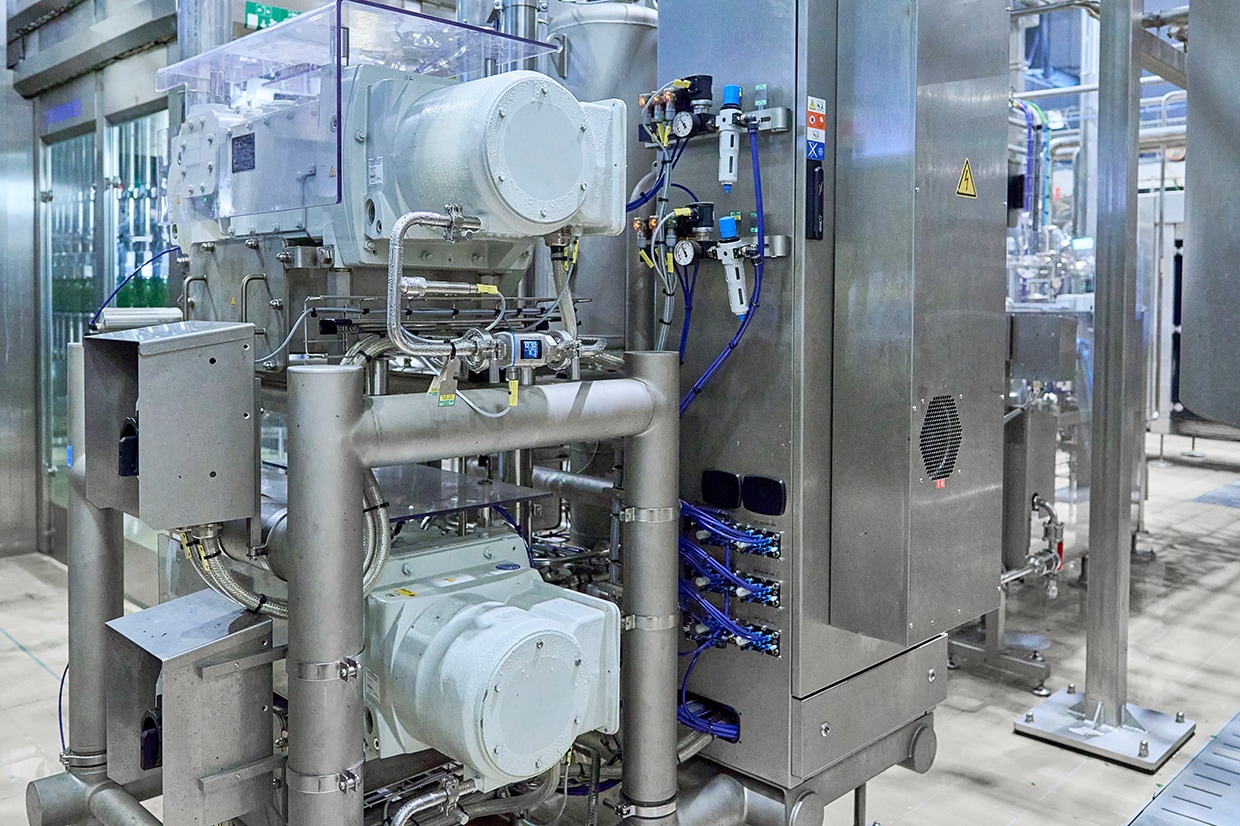
    The pump unit with a dry vacuum pump is available for the following filler types: Dynafill, Modulfill HES, HRS and HEL – not only for new machines but as a retrofit, too. Basically, the liquid ring pump can always be replaced by a dry system. Krones will then supply the pump unit with the cooling variant requested and integrate the kit into the customer’s line and modify the software on site. More than ten units in all are currently proving their worth in lines featuring the Modulfill HES – in both new machines and ones retrofitted with the new solution.  

    Wieviel Wasser und Energie lässt sich sparen?
    The dry vacuum pump – here for the Dynafill – is available for new machines and can also be retrofitted in existing fillers.

    How much water and energy can be saved?

    Dry vacuum pumps consume about 25 per cent less power than liquid ring pumps for the same throughput. But things get really interesting when you look at water consumption: With a liquid ring pump, the sealing water is drained off into the gully and continuously replaced by fresh water. The resulting high consumption is reduced if the sealing water is recirculated. But even in that case it has to be replaced by fresh water at regular intervals due to accumulating beer residues. A dry vacuum pump, by contrast, only needs water for cooling. And that water can be re-used, so that no more than ten litres of water are needed per hour. Compared to a liquid ring pump, that is “almost zero” as Hannes Deubzer puts it. This includes the water used for cleaning as, even though no beer foam gets into the pump, it still has to be cleaned from time to time. Aerosols (airborne liquid particles) do find their way in despite the foam separator and dry onto the hot spindles. That is why every half hour an integrated automatic rinsing system sends jets of water into the pump for a second. That water evaporates, thus cleaning the spindles. Each of these rinsing routines consumes two litres of water. The 50 litres of pure water needed for rinsing the pump during big pump cleaning as part of each CIP routine must be added to this. 

    In absolute terms, the potential for actual savings will depend on the conditions found on site, explains Hannes Deubzer: “Water consumption is determined by a number of factors, including the temperature of the fresh water used. When a brewery has access to cold well water, it will need significantly less of it for cooling.” To give an example: A brewery in western Europe where Krones retrofitted dry vacuum pumps as part of a pilot project was able to reduce its water consumption by over 99 per cent, from more than 2,000 to just under 10 litres per hour. 


    Better TPO thanks to the new pump? 

    The basic principle in beer filling is this: Less oxygen equals superior product quality. Therefore, oxygen-sensitive products like beer benefit from the better TPO provided by dry vacuum pumps, which generate a more powerful vacuum than their liquid ring counterparts. As a result, more oxygen is purged from the glass bottles, and less oxygen makes its way into the beer. For new machines that combine the latest-generation HES filling valve with the dry vacuum pump, Krones can in fact guarantee an oxygen pick-up during filling that is lower than in previous filling systems. 

    The situation is less cut and dry for retrofits because here the better vacuum at the pump does not automatically reach the bottle. How effectively this can be accomplished will depend on the machine’s maintenance status, and particularly on the condition of its seals. It is true, the Krones service technicians can overhaul the machine prior to retrofitting the new pump unit and optimise the filling parameters. But in a new machine all cross-sectional areas of the connecting pipes between pump and filling valve have been optimised to match the dry vacuum pump’s design. That is, of course, not possible in a retrofit.

    We’ve noticed that by using the new solution individual customers were able to reduce the amount of water needed to almost zero, irrespective of how high consumption was before. Especially when the current vacuum system is cooled by means of fresh water, it’s definitely worthwhile considering a switch. Erwin HächlHannes DeubzerTechnical Product Management Retrofits

    When does it make financial sense to switch?

    All in all, dry vacuum pumps are the superior technology for filling applications. Customers choose this option by reason of lower water and power consumption, often also motivated by the sustainability targets they’ve set themselves. As far as new machines are concerned, lower oxygen pick-up resulting in better beer quality plays a crucial role as well. An appraisal of total cost of ownership also includes the costs for power, water and wastewater at the facility concerned, and the amount of fresh water needed for cooling purposes. A retrofit appraisal runs along similar lines. Customers should think it through carefully because the retrofit will after all replace a properly functioning liquid ring pump. 

    On request, Krones can draw up an individual return-on-invest calculation for every retrofit quotation as a basis for decision-making. The potential for savings – especially of water – is in any case huge, emphasises Hannes Deubzer: “We’ve noticed that by using the new solution individual customers were able to reduce the amount of water needed to almost zero, irrespective of how high consumption was before. Especially when the current vacuum system is cooled by means of fresh water, it’s definitely worthwhile considering a switch.” 


    27. May 2026
    8:15 min.

    Want to read more Krones stories?

    You can easily send a request for a non-binding quotation in our Krones.shop. 

    Request new machine
    kronesEN
    kronesEN
    0
    10
    1