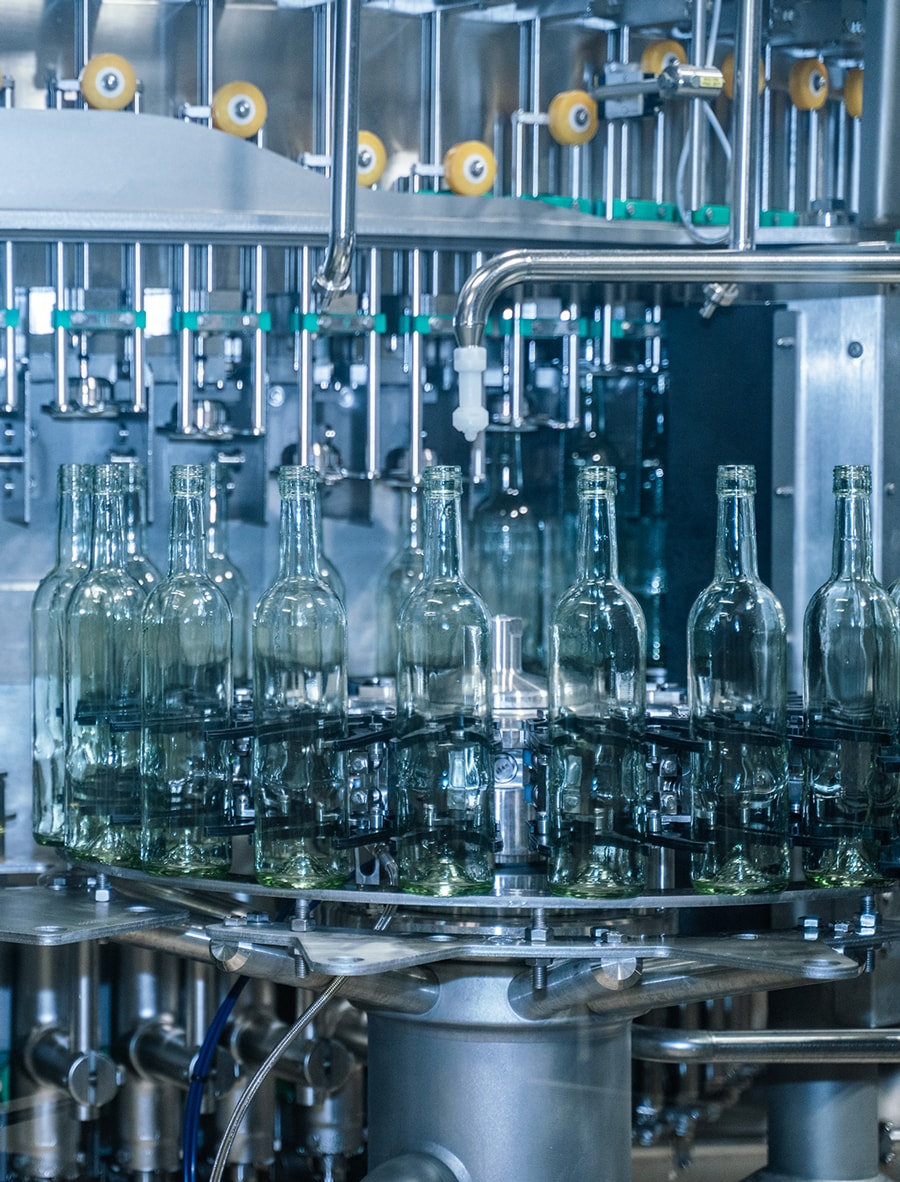
Maximum precision when filling carbonated beverages into glass bottles
Individually adjusted to the product
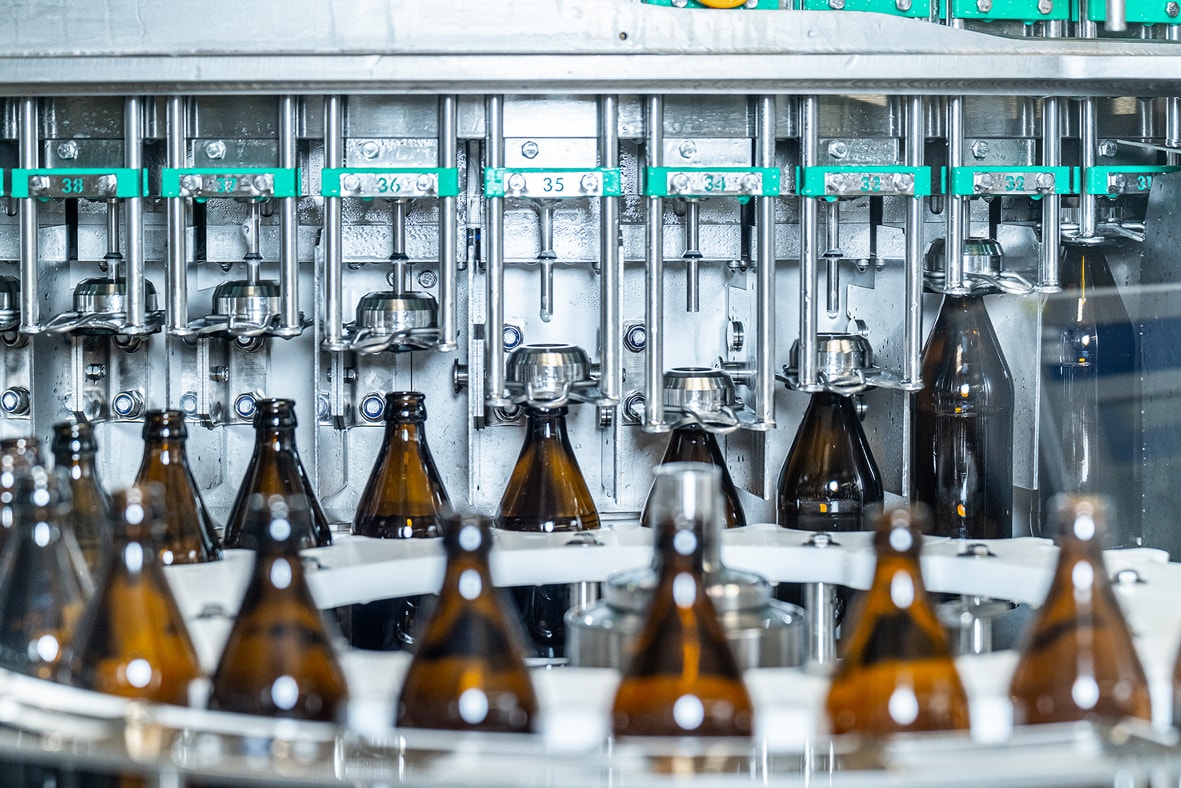
When it comes to reliably filling various carbonated products, the Modulfill HRS short-tube filler is the optimal choice. Krones individually tailors the filler to suit the respective product characteristics, enabling hygienic, gentle and precise filling into glass bottles at outputs of up to 78,000 containers per hour. The Modulfill HRS can also be optimally combined with machines from the Krones range of cappers.
Beer
- Lowest possible oxygen absorption through multiple pre-evacuation steps with intermediary CO2 flushing
- Latest vacuum technology
Carbonated soft drinks and water
- Solution individually adjusted to the product and in line with the microbiological and hygiene requirements
- Highest flexibility thanks to Krones MultiGuide Base clamping starwheels
Wine, champagne, sparkling wines
- Highest demands on filling accuracy
- Very gentle product handling
- Highest flexibility thanks to fully automatic fill level adjustment

The filling system
- Reliable fill level determination via the vent tube
- End of filling after liquid contact with vent tube
- Low-oxygen filling through several pre-evacuation steps with intermediary CO2 flushing
- Electropneumatic filling valve
- One filling speed
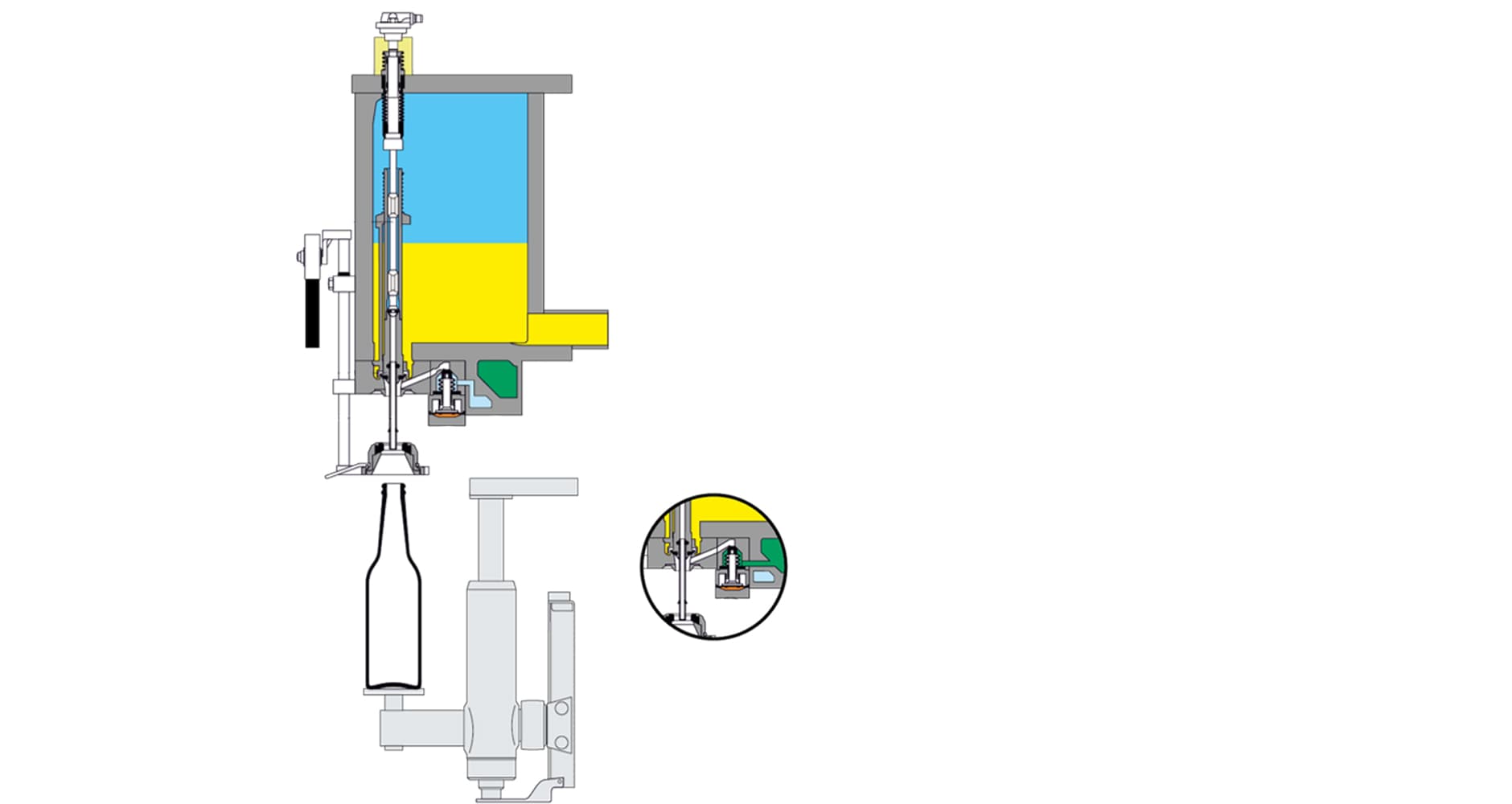
Method of operation of the valve
Standard short-tube filler
First the glass bottle is pressed on and optionally pre-evacuated multiple times. The filling process will start as soon as the same pressure prevails in the ring bowl and the bottle. If the liquid level reaches the end of the vent tube, no more gas can escape from the bottle - and the filling valve closes. After a settling phase, the pressure in the head space of the bottle is released via the snifting valve and the filled product exits the machine.
Viscosity: < 10 mPa·s
Pulp : ≤ 0.4 mm/proportional < 10 %
Fibres: 1 x 5 mm/proportional < 5 %
For filling oxygen-sensitive products
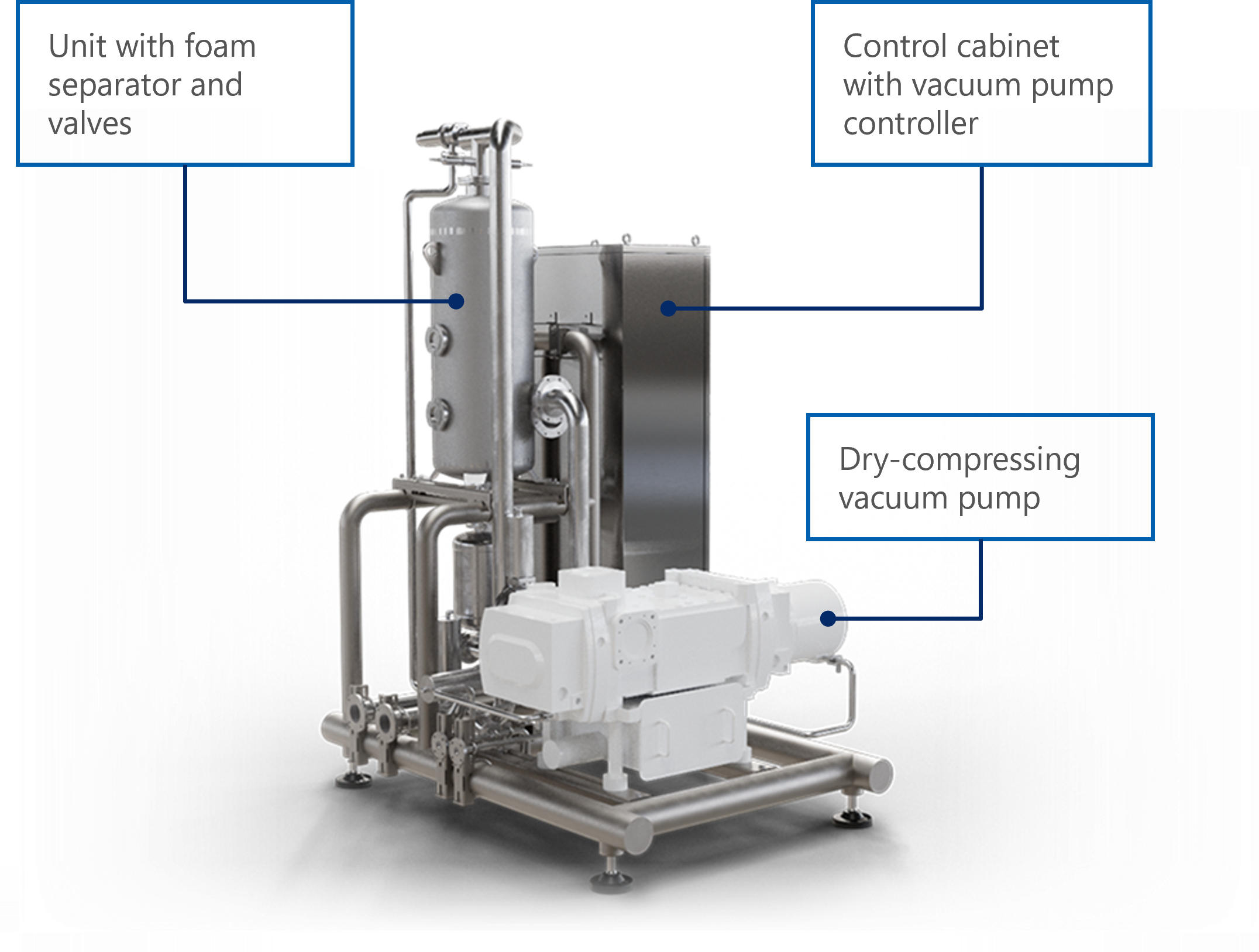
Optional: pump unit with dry-compressing vacuum pump
The unit has been designed in the usual Krones quality and is viewed as an integral part of the machine. Using a dry-compressing vacuum pump means that not only can production be more sustainable, but a higher product quality can also be achieved during the filling of oxygen-sensitive products.
Benefits to you
- Achievement of lower vacuum values in the filling process
- Optimum hygiene conditions in the machine, since the piping and foam separator are integrated into the CIP circuit as usual
- Significant minimisation of the water consumption during production
- Reduced energy consumption by up to 25 percent*
Benefits to you
Best technological values
- Several pre-evacuations
- Optimal interconnected CO2 flushing
Version in hygienic design
- Self-draining surfaces
- Clean pneumatic components hosing and electrical wiring
Precision and long service life
- Special pneumatic components: Far longer service life cycle than conventional switching valve technology