Through a series of projects, Lion Brewery has reduced its resource consumption, made production more efficient and increased the diversity of its products.
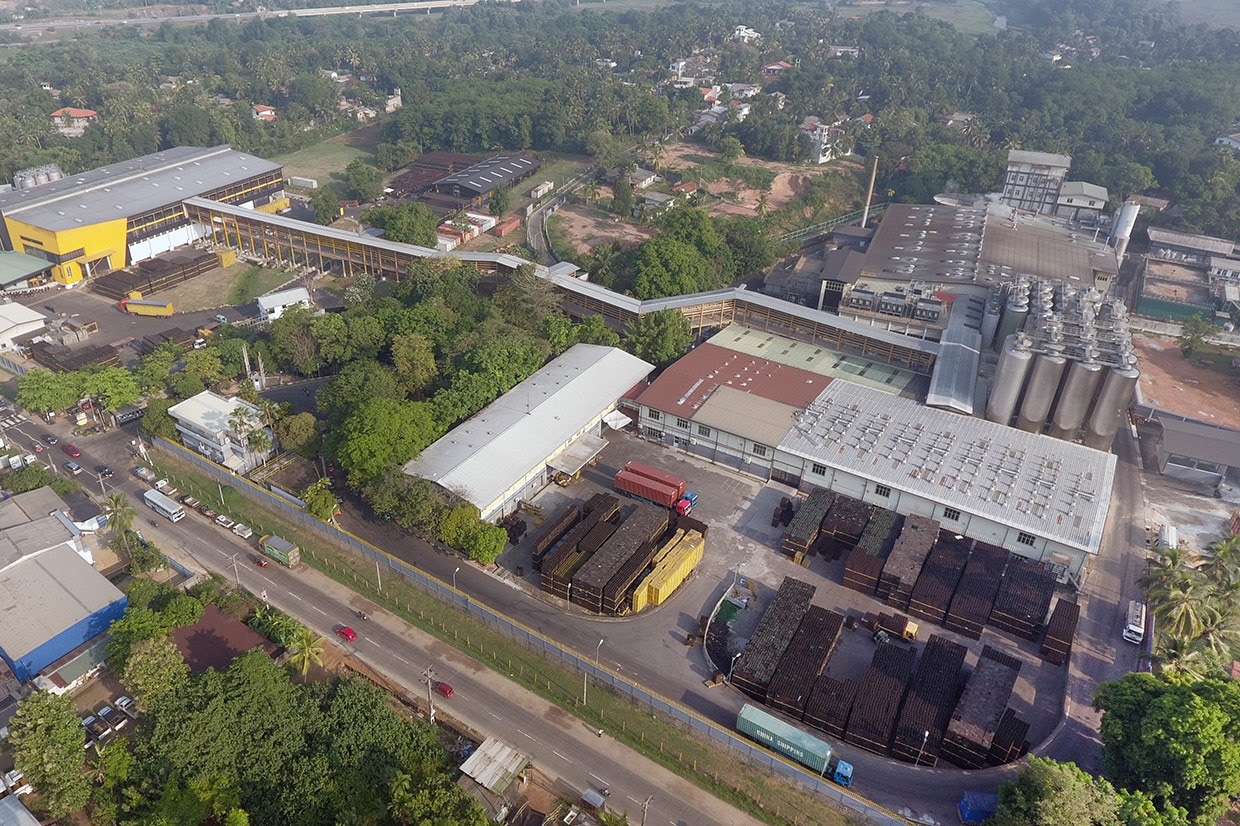
Lion Brewery’s plant in Biyagama, near Sri Lanka’s capital city Colombo
Image credits:
Lion Brewery
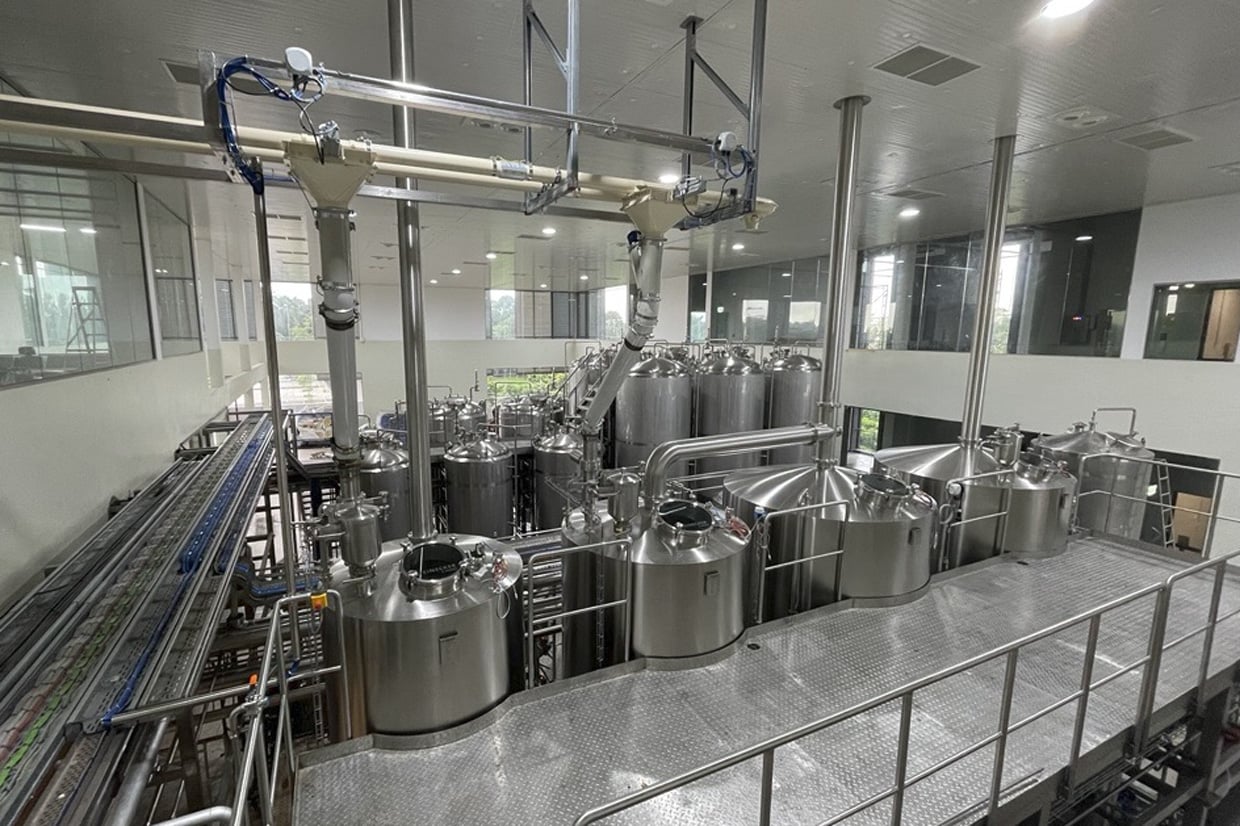
Lion Brewery is systematically driving its own evolution – with expert guidance from Steinecker and Krones. They’ve completed some rather impressive projects in recent years: Together, we’ve conducted a sustainability assessment, implemented an initial raft of measures resulting from the assessment, built a new innovation brewery (shown on the header photo), and connected the brewery’s systems to state-of-the-art SAP solutions. And the work continues. Because Lion doesn’t stand still.
“We are a very forward-thinking brewery. We come up with new ideas every day.” That is how Widhura Nuwan, Senior Vice President Engineering, describes the company culture at Lion Brewery. When it comes to production efficiency and sustainability, Lion is way ahead of the pack. “Sustainability is part of how we do business and we are always measuring ourselves against other international breweries,” says Widhura Nuwan. “For example, availability of water at present, is not a significant constraint but we’re working to reduce our consumption anyway, because it’s the responsible thing to do.” Energy on the other hand, is a different story. Sri Lanka has a significant portion of hydro power but it must import all of the fossil fuel required to meet its remaining energy needs. Besides reducing costs and carbon emissions, increasing energy independence yields obvious advantages. Resource-efficient production is not merely sustainable – it lends stability, especially during times of crisis, because it reduces the dependence on imported fossil fuels.
Holistic sustainability assessment
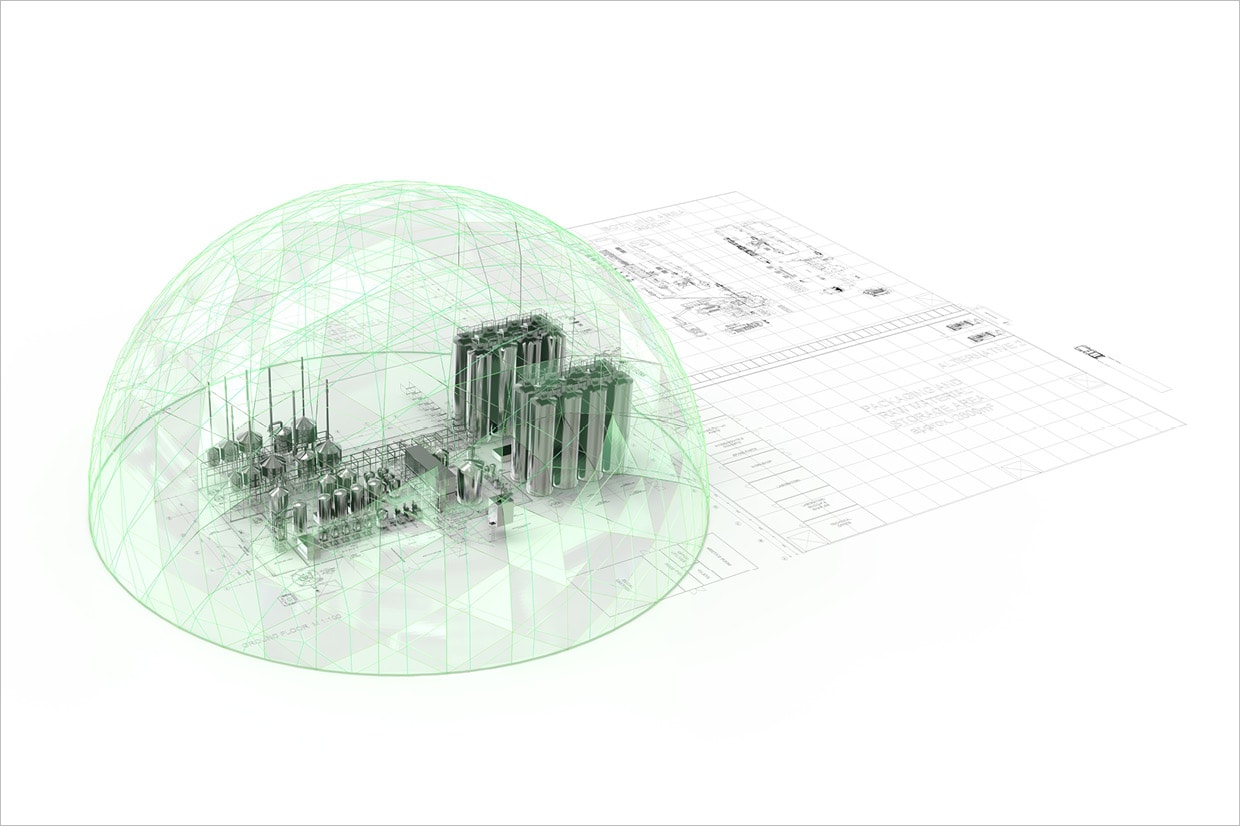
In 2023, Lion Brewery initiated a systematic sustainability assessment in partnership with Steinecker and Krones. “Together, we are one of the few providers that has expert knowledge of all the processes in-house and the ability to offer holistic advice on brewery and filling systems,” explains Severin Thomandl, Head of Sales for the Asia-Pacific region at Steinecker. Details about the assessment and its outcomes can be found in this article. The consultation yielded a comprehensive report, which included realistic targets and a step-by-step implementation roadmap taking into consideration operational practicality. The plan is based on the Brewnomic system, whose individual modules can be mixed and matched as needed and are designed specifically for breweries.
Lion Brewery has been collaborating with Steinecker on sustainability measures in the brewery since 2023.
The main principle of the roadmap is to “Reduce – Reuse/Recycle – Replace”. It starts with reducing the amount of energy required, followed by maximizing energy recovery, and finally, seeing to it that any remaining energy needs are covered by renewables to the greatest extent possible. The roadmap also calls for addressing “quick wins” first. In other words, you start with those measures that can be implemented quickly, with minimal effort, before taking on more complex changes that require long-term capex planning. Widhura Nuwan is very pleased with the assessment: “We now have a five-year plan that will help us chart our energy transition journey as well.” As he reports, the first items have already been implemented: “First, we reduced the need for heat, in order to save fuel. We then tackled our electrical power needs, followed by our water consumption.”
Virtual consultation works
A unique feature of the assessment is that it was done entirely remotely, thus saving considerably on time and travel expenses. That was possible thanks to Lion Brewery’s own in-house technical expertise and because the equipment came from Steinecker and Krones. “We were able to pull the relevant parameters – such as electricity, heating energy, hot water and cooling – from the Botec process control system or from flow meters and temperature sensors,” explains Thomandl. The consulting team was able to fill in any missing values from its own experience with other lines around the world and make plausible assumptions. Widhura Nuwan also feels the virtual approach worked well. “It makes a lot of sense to do the initial assessment remotely, as it is cost and resource effective. Of course, the final interventions themselves should happen on site as it supports coverage of on ground considerations as well as building the connection between the technical parties involved. Our team benefits enormously from the specialists’ knowledge transfer and for that reason, I would always take a hybrid approach – that is, do the assessment remotely but implement the resulting measures in person, on site.” Of course, Steinecker and Krones also advise breweries that use equipment from other manufacturers. But in those cases, the initial assessment and measurements must be done on site. As Severin Thomandl explains, Steinecker customers can have it both ways: “For Steinecker customers whose equipment is in well-documented ‘as-built’ condition, we offer both hybrid and fully virtual options.”
The first measures are already bearing fruit
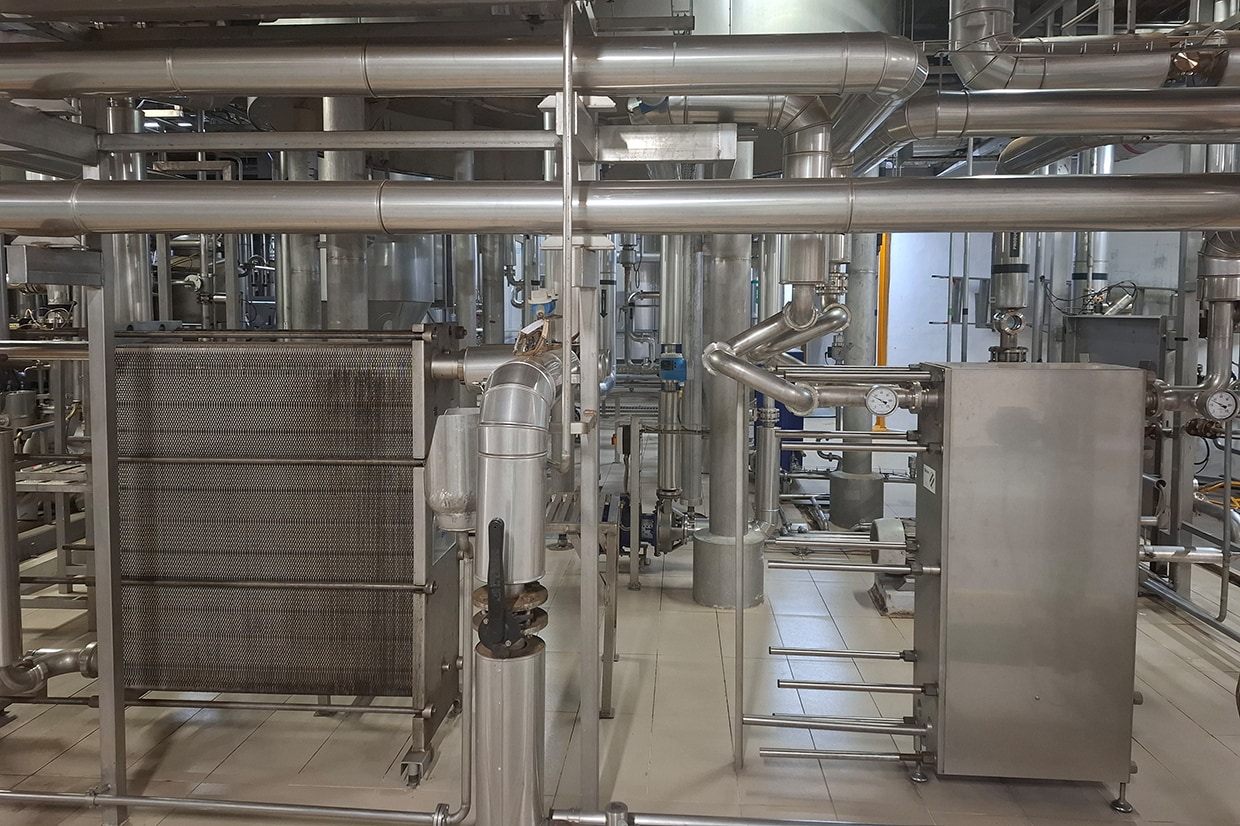
The first optimization measures have already been implemented in both brewhouses. Heat is recovered from wort cooling and evaporation and used in the lauter wort heater, thus allowing more flexibility with respect to evaporation rates. This system is the preliminary step toward implementing EquiTherm Brew, Steinecker’s system for recovering thermal energy in the brewhouse. For the full EquiTherm Brew solution, Lion still needs to convert both of the mash tuns from steam to hot-water heating. Until then, however, Lion is already achieving considerable savings, as Widhura Nuwan explains: “Recovering that heat and lowering the evaporation rate from 4.5 to at most 3.5 has significantly reduced our fuel consumption.”
Wort cooling optimization units
Image credits: Lion Brewery
CIP optimization saves several thousand euros
Cleaning is an important starting point for more efficient, resource-saving production. While Steinecker was on site at the Lion plant, all CIP processes for the brewhouse, fermenting cellar and bright-beer cellar were analyzed and optimized. Besides considerable time savings for the respective workflows, the consumption of water and cleaning media were also reduced substantially. In the fermenting cellar alone, various adjustments to processes and software cut the time required for cleaning the fermentation tanks roughly in half. In addition, the CIP processes for the pipe systems were modified to a “plug flow” concept, in which just enough water is pushed through the pipe to form a sufficiently large plug to displace the cleaning medium (instead of displacing the entire length of the pipe with water). That significantly reduces the volume of water needed for displacement. Marcel Thielecke, commissioning engineer at Steinecker, implemented this measure at Lion. As he explains, “When commissioning a new brewery, you’ll often deliberately set the cleaning processes with additional reserves, to ensure product safety and microbiological stability. One reason for this is that commissioning is done on a tight timeline, and you can’t yet make long-term observations under real production conditions. Once the system has been in operation for a while, it makes sense to take another look at the cleaning processes and do some fine tuning to further optimize them.” Widhura Nuwan appreciates that approach: “Our cleaning processes were initially set up for safety, but with maturity of the process, it is now possible to optimize without compromising on safety or quality. Hence the concept really does make sense and the advantages are obvious.” And besides, adds Severin Thomandl, optimizing the CIP processes truly is a quick win: “You don’t have to invest in new hardware. You simply make some adjustments to the controls.”
The results are quite respectable: Water consumption was reduced by 21 percent per hectoliter of cold wort while also giving significant savings through thermal energy reduction and gains in productivity. Widhura Nuwan is impressed: “I have been studying resource efficiency for a long time now, but I am really surprised just how much we’re able to save by optimizing our CIP.” He has nothing but praise for the technician’s work: “Some people come, do the job and leave. But Marcel also took the time to train our technical staff so that they know what to do.”
Repurposing used kieselguhr
Lion Brewery has also been driving sustainability in its operations above and beyond the recent assessment. For example, with the help of Steinecker, they’ve found a solution for repurposing used kieselguhr. Lion began by reducing the amount of filter material used per hectoliter of beer and then engaged Steinecker to work with a filter manufacturer to install a dewatering system, a press that squeezes residual moisture from the kieselguhr sludge prior to discharge, thus eliminating the need for additional drying. The waste kieselguhr can then be used to partially replace virgin raw materials in the production of concrete and concrete blocks. In 2025, this project earned Lion Brewery the Global Drinks Intel ESG Award for “Waste Reduction Achievement of the Year”.
Innovation brewery opens up new possibilities
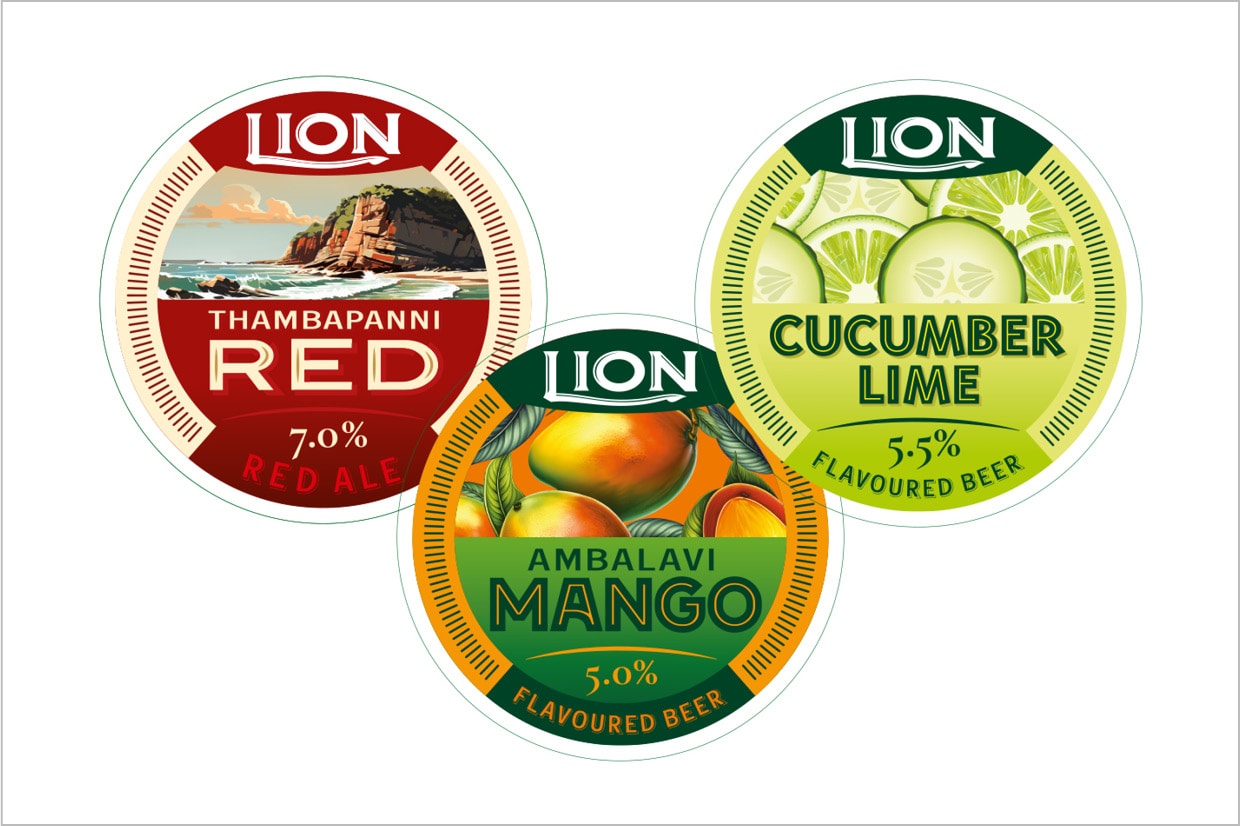
Lion Brewery is also continuously improving its beer: Since 2024, Lion’s new innovation brewery has been up and running, consisting of a CombiCube from Steinecker and a swing line from Kosme for cans and glass bottles as well as a kegging line. This investment was necessary to enable Lion to experiment with new brewing styles and infuse local ingredients while brewing small batches of specialty beers – neither of which was practical in the high-volume production environment of the large brewery. As a result, Lion Brewery has been able to significantly expand its product offerings, which now include exotic brews such as Pure Ceylon Tea Beer, Cucumber Lime, Ambalavi Mango and Thambapanni Red Ale to name a few. Lion also uses the innovation brewery as a training ground for employees and intends to further expand this aspect. As Widhura Nuwan explains, “We want to offer our trainings to others as well and are working on getting certified by the large brewery institutes.” After all, the innovation brewery is the only one of its kind in all of Sri Lanka.
Innovation brewery brewhouse and tank farm
Image credits:
Lion Brewery
Many new beer brands are developed in the innovation brewery
Image credits:
Lion Brewery
Digital solutions as efficiency-booster
Lion Brewery is also leading the charge in digital transformation. Lion was one of the first in the industry in Asia to implement S/4HANA, the latest enterprise resource planning (ERP) system from SAP. As the name ERP implies, the system enables the planning and management of all resources – particularly materials – required for the company’s operations. “It made sense to connect our production to this high-quality ERP system, so we could make optimal use of an end-to-end integrated data system,” says Widhura Nuwan. The Digital Services teams from Krones and Steinecker collaborated closely on the project. “For Lion, we set up the interfaces between our systems and their SAP system. As an SAP partner, Krones also offers complete SAP implementations,” explains Daniel Zmijanac of Krones’ Digital Services sales team.
The two large brewhouses were already connected to the old SAP system by way of the Botec process control system. Now they are integrated into S/4HANA, which automatically notifies Botec of the materials needed when a new beer order comes in. As for the filling and packaging systems, the existing system for analyzing the production data and recording the lines’ status was replaced with the latest analytics solution. In addition, the lines were equipped with the Line Management solution for automated order processing and material supply. Once these new systems were installed, the interface to the SAP system was set up. Line Management uses the orders that are transmitted from SAP to prescribe or recommend line changeover details. That supports the operating personnel and makes product changeovers more efficient. Moreover, individual line components can start work on a new product while the dry end of the line is still finishing up packing the previous one. This ability to make changeovers on the fly saves a lot of time. Line Management enables processes to run more efficiently, with fewer cleaning stops needed. And according to Daniel Zmijanac, they still haven’t exhausted the possibilities: “For example, one feature we’re still looking at is the monitoring of residual product in the tank, which makes it possible to optimize the line feed of materials like glass bottles.”
As Widhura Nuwan sees it, the new digital solutions give Lion Brewery additional options for fine tuning and improving its processes: “We want to build a high-quality data lake, a centralized repository for all company data, which will allow us to access additional data-based solutions in the future, like comprehensive data analytics or augmented reality. We also want to make data available on the shopfloor. For example, to analyze material losses during packaging for each stock keeping unit as a basis for developing further optimizations.” And now, the production data from the various Krones systems can flow right into the data lake. According to Widhura Nuwan, Lion Brewery’s long-term plan is to use the Krones solution Shopfloor Guidance for condition-based maintenance (CBM): “At the moment we keep quite a lot of material and spare parts on hand towards risk mitigation, which ties up capital. With a good CBM system, we could further streamline our inventories and ensure better fund utilisation.”
Lion Brewery can be quite satisfied with the recent projects. Operations have become more efficient and are already bringing in cost and resource efficiencies. The innovation brewery has contributed to a significant expansion in the portfolio and also continues to be a source of inspiration and knowledge transfer to many. Widhura Nuwan is already looking to the future: “The next stage is probably to completely switch over to EquiTherm Brew. We will continue, step by step. And one day we hope to implement Phoenix BMC or another, similar solution, which will make us truly energy independent. But we’ve got quite a way to go until then.” In his view, the expert, professional – even friendly – support from Steinecker and Krones is an important factor. As he puts it, “Collaboration is almost the wrong word to describe our work together. It feels a lot more like a family.”