
 Manfred Kaiser
The Austrian beverage group Starzinger has teamed up with KIC Krones to implement an entirely new hygiene concept on its filling lines.
Starzinger has made hygiene during beverage filling a top priority, and for good reason: The privately owned and operated beverage group handles a diverse range of products and strives to ensure the highest level of microbiological safety not only for its own brands but also for its co-packing clients. To this end, Starzinger has teamed up with KIC Krones to implement a progressive hygiene concept for all machines and lines.
Victor Starzinger and his mother Ludmilla represent the company’s fifth and fourth generations of leadership. Victor describes the company’s philosophy as follows: “We are an innovative, modern, and motivated family enterprise. Market demands change fast – and we have to keep up. We serve over 1,000 co-packing clients and filled more than 1,200 different SKUs in 2020. To meet this demand, we need a strong partner to consult with on both technology and cleaning matters.”
To meet the market’s demands, we need a strong partner to consult with on both technology and cleaning matters.

Production manager Johannes Hauser adds: “What distinguishes us from the competition is that we are continuously adding the latest trending products to our portfolio – and have done so for years – like cold brew coffee, BCAA drinks (drinks containing branched-chain amino acids), and, now, hard seltzer. But we really run too few sensitive beverages to warrant installing a true aseptic line. After all, these trends come and go very quickly.” Hauser goes on to say, “And because we’d be investing not only in an aseptic line but also in its maintenance and operation, we decided instead to put our money on solutions that enable us to meet the highest possible standards of hygiene on our conventional lines.”
And so, Starzinger opted to introduce a hygiene concept that meets those high standards and can apply equally to all of its lines.

A successful family business
With four mineral water operations and two breweries, Starzinger has a broad beverage portfolio that includes the traditional soda brand Schartner Bombe. The tradition-steeped company is also a professional private-label producer, not only filling third-party beverages but also advising clients on container choice and design.
Starzinger employs around 250 people at five sites in Austria and operates four PET, three glass, and three canning lines, for a total output of around 180,000 units per hour. That makes the beverage group one of the biggest producers of non-alcoholic drinks in Austria. Starzinger is also well established on the international market.
Krones and Starzinger have a long history of collaboration. Krones installed all three of the canning lines at Starzinger’s plant in Frankenmarkt, in Upper Austria, where one line recently got a new filler and packer and the pasteurizer was upsized. The site’s only glass line includes Krones machines, and one of the two PET lines there was supplied entirely by Krones. That state-of-the-art PET filling line was commissioned in 2017 and was the first-ever Krones line to use LineXpress with its full complement of functionality, largely automating the changeover process.
“The higher the demands on us, the stronger we need our partner to be”
As when Starzinger chose Krones to deliver lines and equipment, the decision to bring KIC Krones(opens external link in a new tab) on board for the hygiene concept arose in part from the companies’ many years of successful collaboration. Initially, KIC Krones was “just” the adhesives supplier. Then, in 2019, detergents were added into the mix. And that’s how the two companies came to discuss the possibility of overhauling the entire hygiene concept for the lines.
We realized that the people at KIC Krones really know what they are doing: They have a genuine interest in taking us in the right direction.

At Starzinger’s request, Simone Weiherer, a member of KIC Krones(opens external link in a new tab)' field staff, ran a check on the function and efficiency of all the machinery, drew up an overview of the current state of things, and then used this information to develop an integrated concept. That was an excellent opportunity for KIC Krones to demonstrate its competence as a system partner. “The higher the demands on us, the stronger we need our partner to be. So it’s important that our cleaning concept be well aligned with our machinery. We’ve been working with Krones for many years now, and nearly all of our filling systems are from Krones,” explains Johannes Hauser. “We then realized that KIC Krones really know what they are doing: They don’t just want to sell us something. They have a genuine interest in supporting us for the long term and taking us in the right direction.”
In 2019 and 2020, KIC Krones optimized the cleaning technology on one PET line and one glass line (excluding the pasteurizer) in Starzinger’s Deutschkreutz plant on Austria’s border with Hungary. After that, it was time to tackle the hygiene concept for the main plant in Frankenmarkt.
“Not a single complaint”
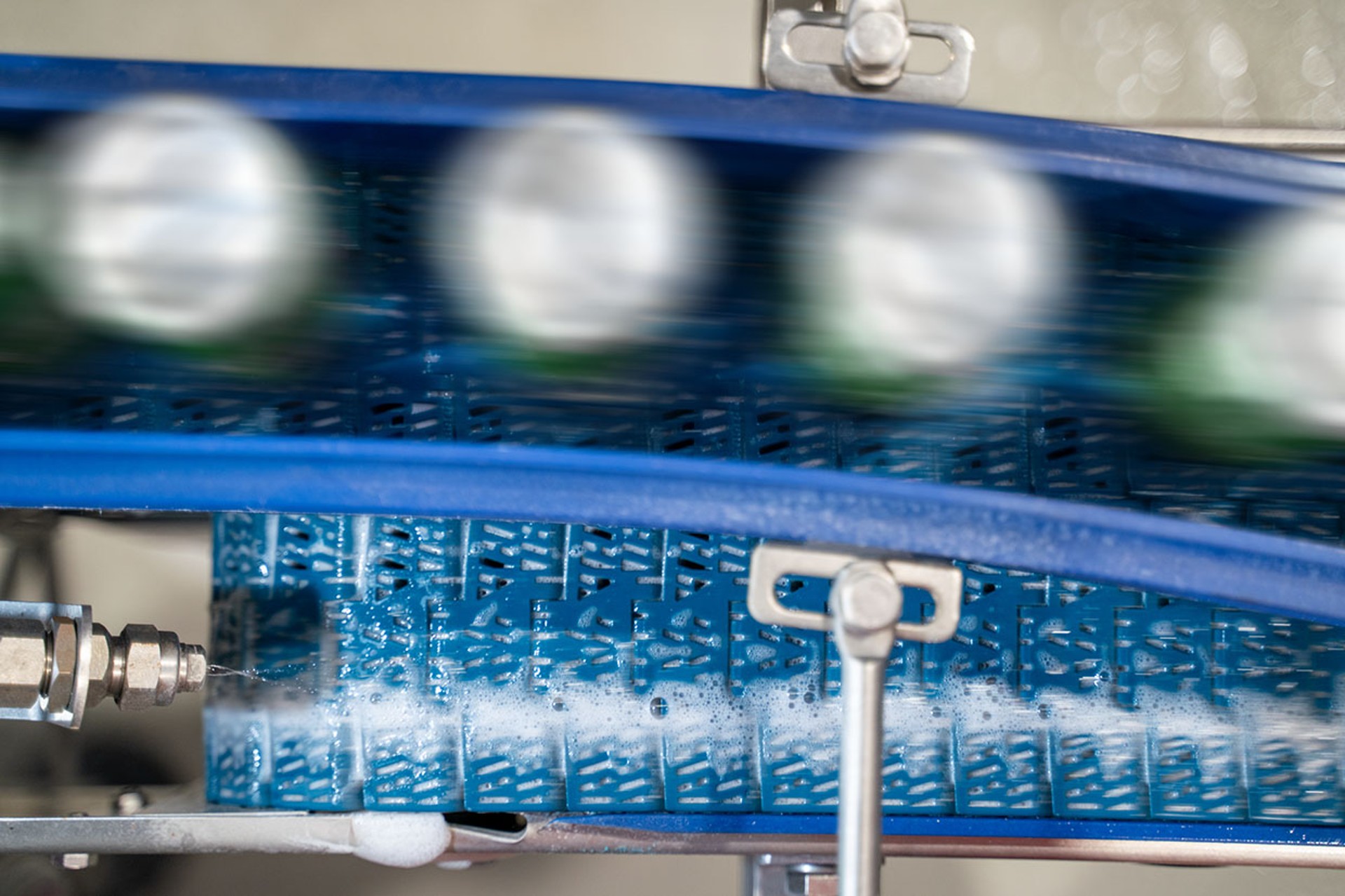
The integrated concept is easily explained: Clean as much as necessary without using more cleaning agents than necessary. And be as gentle on the machines as possible. Because, of course, the diverse range of products makes for more frequent product changeovers – and cleanings.
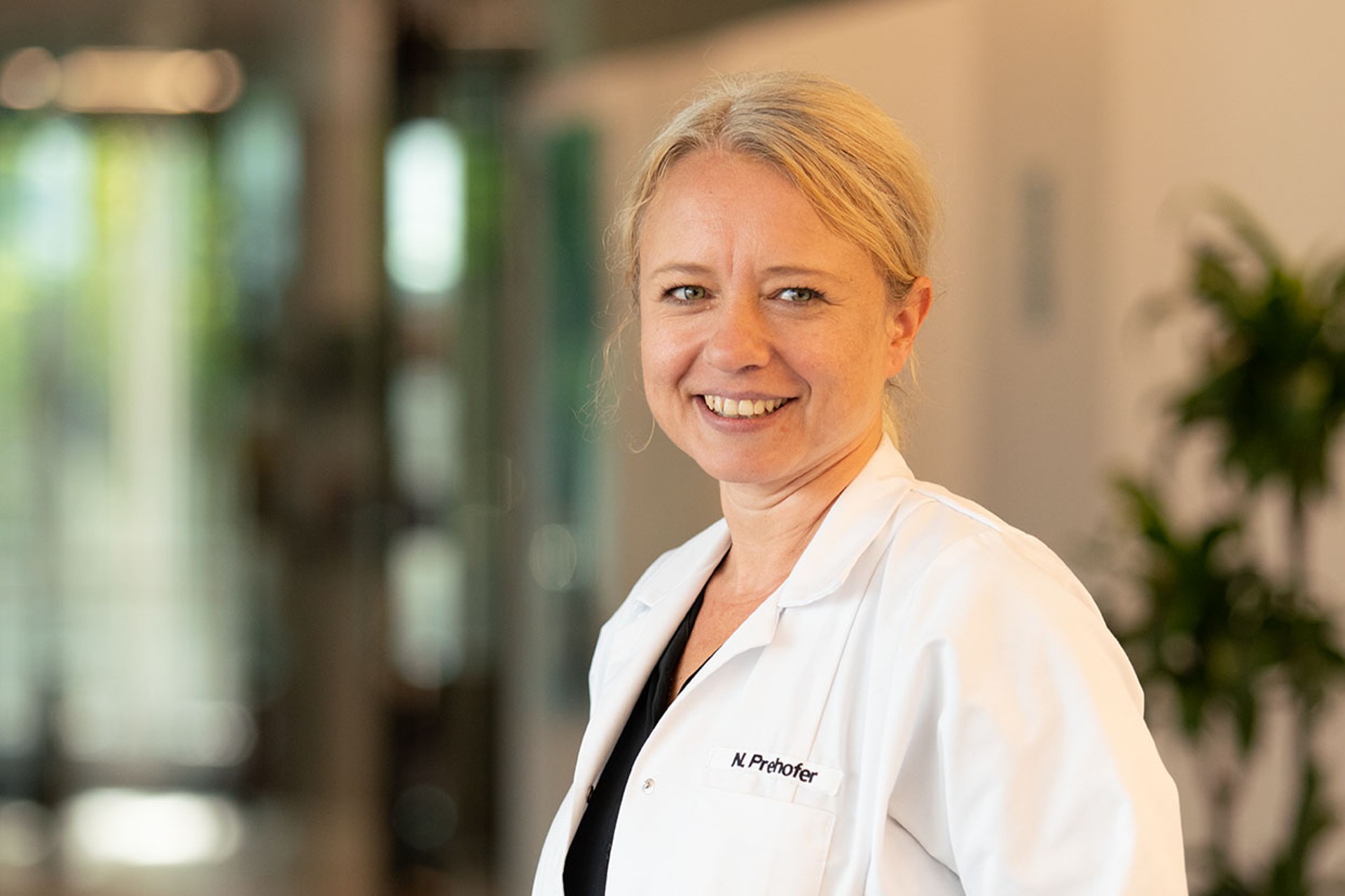
“A shorter, more effective CIP process makes for shorter downtimes and lower costs,” stresses Johannes Hauser. Nadine Prehofer, head of quality assurance at Starzinger, adds: “The microbiological situation is vastly improved since we’ve been working with KIC Krones. We’ve been able to reduce our costs for cleaning agents while at the same time continually improving product quality. Last year, we didn’t have a single complaint from customers with respect to microbiological safety.”
In the summer of 2021, a canning line and a PET line as well as the portion of the glass line up to the bottle washer had been transitioned to the new hygiene concept. For the two remaining canning lines, Starzinger has ordered chlorine dioxide systems(opens external link in a new tab) from KIC Krones that will go into operation in early 2022.
Krones and KIC Krones offer synergies for an ideal solution
“For us, it’s very important to monitor outcomes and continually ask ourselves what we could do better,” says Nadine Prehofer. “A continuous improvement process is also a requirement for IFS certification [from the International Food Safety and Quality Network]. At the same time, it’s crucial to us that a third party continually review our processes to ensure that no errors slip in that could, in a worst-case scenario, jeopardize product quality. KIC Krones actively supports us in this respect and proposes solutions.”
Johannes Hauser adds with a wink: “And every once in a while KIC Krones can learn something from us since we’re often among the very first to put out a new product that even Krones hasn’t seen yet.”
We appreciate the synergies that arise from the collaboration between Krones and KIC Krones.
To sum up, Johannes Hauser views the new hygiene concept as the ideal solution: “It was, hands down, the right way to go. We can never stop improving – our customers expect it of us and we expect it of ourselves. Without a doubt, this transition has put us on the right track,” says Hauser. “We also appreciate the synergies that arise from the collaboration between Krones and KIC Krones. Because who knows the machines better than their manufacturer? It’s really the only way to strike the ideal balance – achieving lasting, gentle, and frequent cleaning while saving resources and reducing costs.”
The hygiene concept that KIC Krones developed and implemented for Starzinger’s Frankenmarkt plant consists of four parts:
The following is a detailed explanation of how these stages work.
1. Foam cleaning with three components
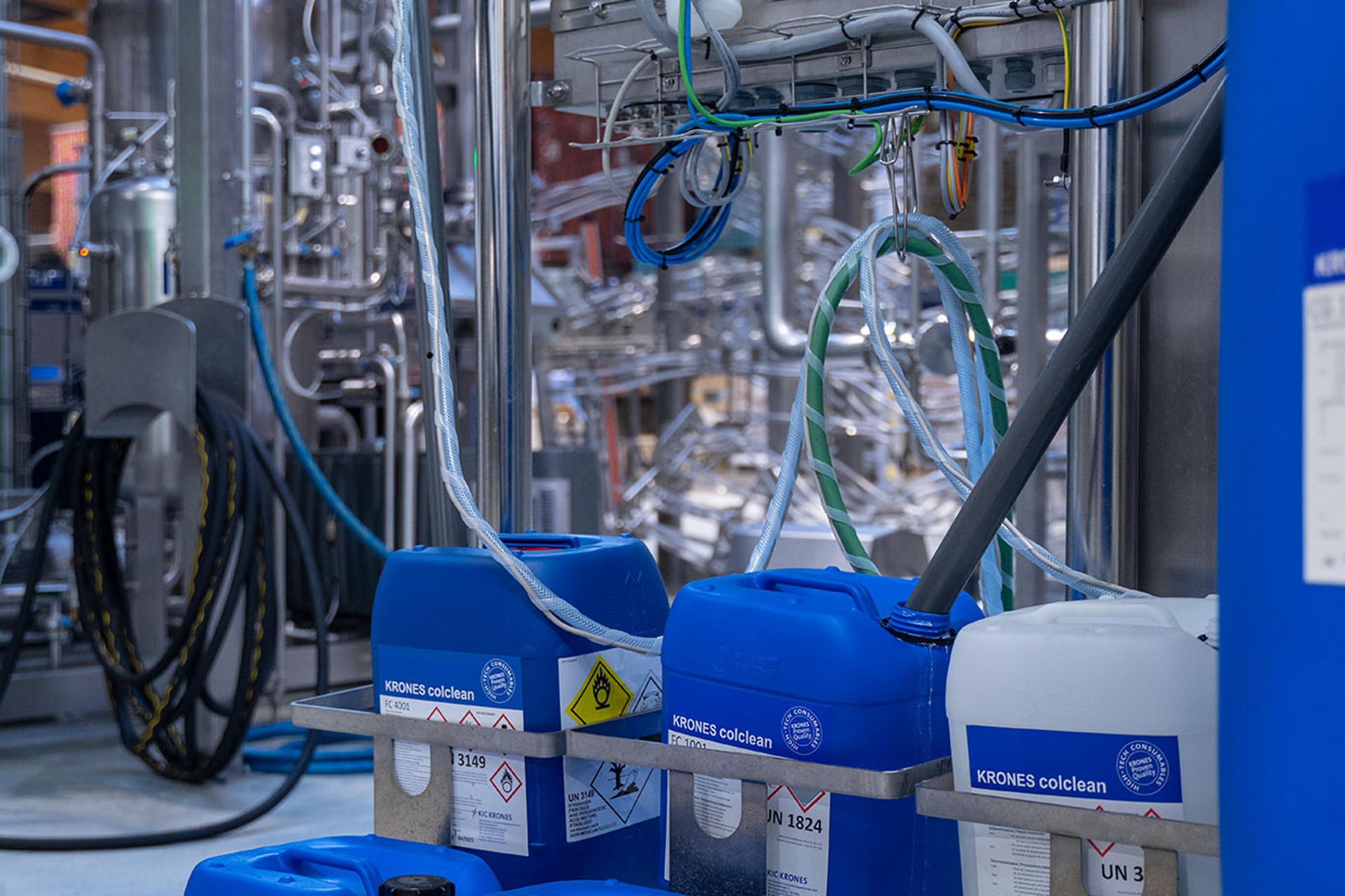
To begin with, KIC Krones optimized the foam cleaning(opens external link in a new tab) and conveyor lubrication(opens external link in a new tab) systems on canning line 2. Where the foam cleaning process had previously used only alkaline and acidic detergents, it now uses three components to achieve better results:
- Alkaline foam detergent to remove organic soiling
- Acidic foam detergent to remove mineral soiling, for reliable descaling
- Disinfectant foam to sanitize the cleaned surfaces
The targeted cleaning of surfaces with acidic and alkaline media beforehand ensures that the disinfectant can work to optimal effect on the cleaned surfaces.
Foam cleaning of the filler is automated, while other machines and the floor can be cleaned using a foam cleaning rod.
2. Conveyor lubrication
The conveyor lubrication system uses a classic wet process, which was switched over to KIC Krones lubricants as part of the new hygiene concept. The change also benefits Starzinger in terms of environmental impact, as Nadine Prehofer explains: “On the new lines, we’ve introduced a workflow and valve controls that reduce water and resource consumption and keep contamination out of our wastewater.”
3. Shorter, intelligent CIP process
The following CIP (clean-in-place) procedures are customary in the industry:
- Caustic, acid, and disinfectant are each stored in separate tanks, which, logically, means that the disinfectant requires a tank of its own. In addition, this process is time-consuming. The reused acid must be replaced several times per year to prevent microbial growth. And, of course, the acid tank also requires additional cleaning cycles.
- Alternatively, the caustic and acid can each be stored in a tank while the disinfectant is dosed directly into the pipes. In this scenario, however, the disinfectant might only be moderately well blended and poorly distributed and will wind up in the sewer line. This process is also time-consuming as the reused acid still has to be replaced frequently.
KIC Krones: intermittent dosing
In contrast, the new CIP procedure that KIC Krones developed works on the principle of intermittent dosing into the acid tank. The disinfectant is added ten to 15 minutes after the acid cleaning phase. Because the acid cleaning happens first, any mineral scale deposits are removed and the disinfectant can do its work to optimal effect on the clean surface.
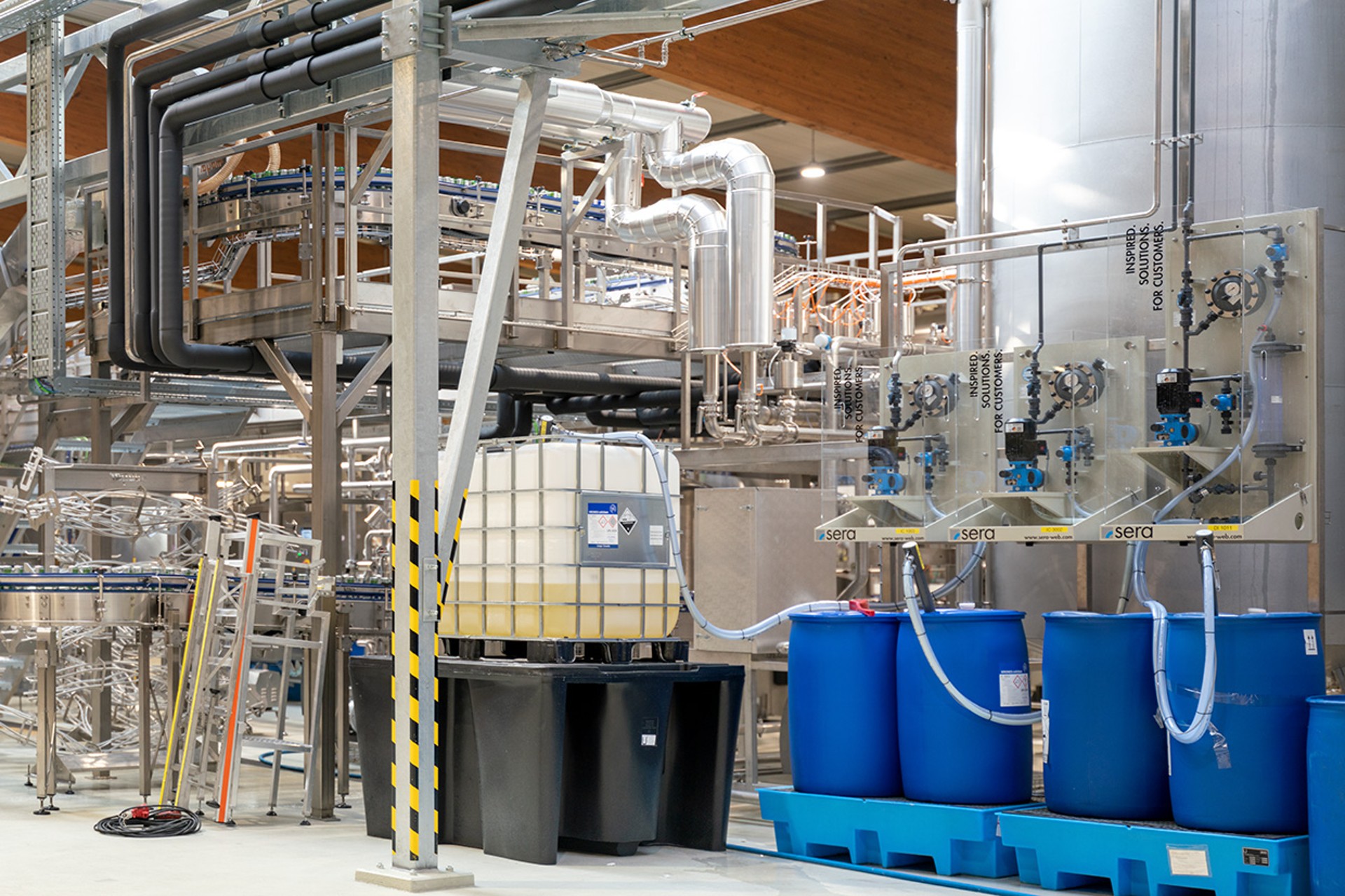
In intermittent dosing, the disinfectant is divided into three equal parts. So it’s always fresh, unused disinfectant that is going in and disinfectant is supplied across the entire time allotted for sterilization. A pause of around 30 seconds between each of the three dosage steps ensures proper mixing.
Starzinger is currently running the new CIP procedure only on the upgraded canning line 2. However, the company plans to implement it across all lines in the future.
CIP procedure from KIC Krones offers many advantages
- Good blending of the disinfectant thanks to intermittent dosing into the acid tank, with brief pauses to allow for mixing
- Precise dosing of a defined amount of disinfectant by way of a mass flow meter
- No separate disinfectant tank needed
- Less time required for cleaning
- The acid is disinfected, which makes for longer intervals between acid changes
- Fewer cleaning cycles are needed for the acid tank
- Single-stage cleaning, with prior removal of mineral scale deposits
4. Disinfecting the tunnel pasteurizer with chlorine dioxide
Redefining the treatment of process water in the tunnel pasteurizer, using chlorine dioxide, was a key aspect of the new hygiene concept. “Of all the technological advancements, the chlorine dioxide system was especially important to us because it solves the problem of pasteurizer hygiene. In the past, we used very aggressive chemicals from other detergent manufacturers. With KIC Krones’ solution, which uses a chlorine-dioxide system, we’re already seeing a significant improvement, even after just a short time,” says Nadine Prehofer.
Conventional procedures and their weaknesses
In the tunnel pasteurizer, process water is recirculated. Various methods are available for treating this water, depending on the operating environment and the customer’s needs. Some of the commonly used chemical disinfectants are oxidizing agents. Unfortunately, when they are used, there can still be microbial growth in the recirculated water and formation of biofilm and odors. To address these issues, larger (often excessive) quantities of the oxidizing agents are used. However, that can drastically shorten the service life of materials and cause corrosion.
Previously, Starzinger had not used chlorine dioxide as a biocide in the pasteurizer because the conventional way of manufacturing chlorine dioxide, using hydrochloric acid, generates corrosive byproducts that damage stainless steel. However, KIC Krones doesn’t use hydrochloric acid to make its chlorine dioxide but rather a special sulfuric-acid-based product that results in no corrosive byproducts – without negatively impacting the disinfectant’s effectiveness.
However, because of its volatile nature, chlorine dioxide cannot be stored and must instead be produced on-site. For this, sodium chlorite from Krones’ colclean series is mixed with a specially optimized sulfuric-acid-based product in a generator. Although the generator makes for a higher initial investment, it pays for itself in the long term because the chemicals used are less costly.
Connecting the chlorine dioxide generator to the pasteurizer
There are various options for connecting the generator to the pasteurizer, depending on the pasteurization process used:
- A single dosing point with a chlorine-dioxide generator and volume monitoring
- Multiple dosing points with a chlorine-dioxide generator, volume monitoring, and distributor
KIC Krones installed the latter option at Starzinger. Here, Krones colclean sodium chlorite and the sulfuric-acid product are mixed in the chlorine-dioxide generator. The chlorine dioxide is then fed into the pasteurizer by way of devices that not only distribute the chlorine dioxide but also monitor the two components for volume, pH, and redox potential. The result is optimal distribution and dosing for every application and all makes and models.
We value your opinion!
Feel free to join in our discussion on LinkedIn
Do you have any questions? Or would you like to share your thoughts on this subject with us? We welcome you to post your comments and remarks!
Hier geht's zum LinkedIn-Post(opens external link in a new tab)