
 Manfred Kaiser
The last combined glass line for returnable and non-returnable containers that Krones installed at Winzer Krems ran for 20 years – and it served the Austrian wine cooperative well. Now, Winzer Krems has had a new line installed for non-returnable glass bottles – and has once again chosen Krones for the job.
This time, in addition to the bottling and packaging machinery, Winzer Krems has also ordered the cleaning and wine filtration systems from Krones – and is thus truly getting it all from a single source.
Strong on exports
Wine-lovers across Austria (and far beyond) recognize Sandgrube 13 in Krems an der Donau as the epitome of premium wine culture. Its Grüner Veltliner in particular – a variety that has its origins in Lower Austria – is associated with the highest quality and the assurance of an exquisite wine experience. Winzer Krems is a wine producers’ cooperative in a region whose wine-growing tradition can be traced back nearly two thousand years. The area cultivated by its vintners stretches over roughly 1,200 hectares some 80 kilometers west of Vienna in the Danube valley, at the entrance to one of Europe's most beautiful river valleys: the Wachau.
Grüner Veltliner grapes account for around 60 percent of the cooperative’s annual production volume of approximately seven million liters. Other white varieties – Riesling first and foremost – make up another one-tenth or so. The remaining 30 percent of grapes cultivated are black-skinned varieties for making red wines, primarily the Blauer Zweigelt. “Demand for red wine has been increasing steadily. And that’s great news for us. Due in part to climate change, our region is becoming increasingly hospitable to growing black grapes,” explains Managing Director Ludwig Holzer. “The fruity style of our wines is very popular on the market.”
The Lower Austria-based wine cooperative does the lion’s share of its business abroad. Exports have surged in recent years and now make up 60 percent of sales. Winzer Krems ships its wines to 25 countries, with Germany topping the list. In Austria, half of domestic sales go to the food-service industry, which was hit hard by coronavirus restrictions in the last two years. Winzer Krems was able to offset those losses with higher exports, gaining new buyers as far away as Australia, Japan, and South Korea. And now that those numbers have flattened out due to inflation, a reviving restaurant trade is, in turn, taking up that slack.
The key to success lies in the details of the process
Winzer Krems began updating its entire plant back in 2019 and has since installed a 6.5-million-liter fermentation and maturation cellar, wine filling equipment, and a bottle storage system. "A €37 million investment is no small matter for a company whose annual revenue totals around €30 million," says Managing Director Ludwig Holzer. Especially considering that they first had to get the 800 or so member vintners (all of them co-owners) on board, as they also have a say in such decisions. "That takes a lot of mutual trust," stresses Holzer. "In all of our decision-making, we have to keep the big picture in mind: Winegrowers and members on the one hand, sales and distribution on the other, and connecting the two is the technology in the cellar and in the bottling hall. And on that point, we simply had to invest in the future."
But the challenges of a wine cooperative sometimes extend beyond decision-making. Consumers tend to view large-scale operations like Winzer Krems with a certain degree of skepticism. "So we have to do all the more to ensure the quality of our wines, to stand out favorably on the market. For that reason, Winzer Krems relies on extremely well-organized planning for the optimal harvest times in each individual vineyard, then completely separates the different varieties and terroirs, practices whole-cluster pressing – without de-stemming and without cold maceration, so that the freshly harvested grapes can be brought to the press as quickly as possible. And finally, the cooperative matures its wines in a reductive, low-oxygen environment with as little fining and sulfites as possible. "The results of this controlled, natural production are fruity, clean wines. Because we want our wines to go down well – and the second glass should be just as agreeable as the first. Precisely this philosophy is what consumers appreciate," explains Holzer.
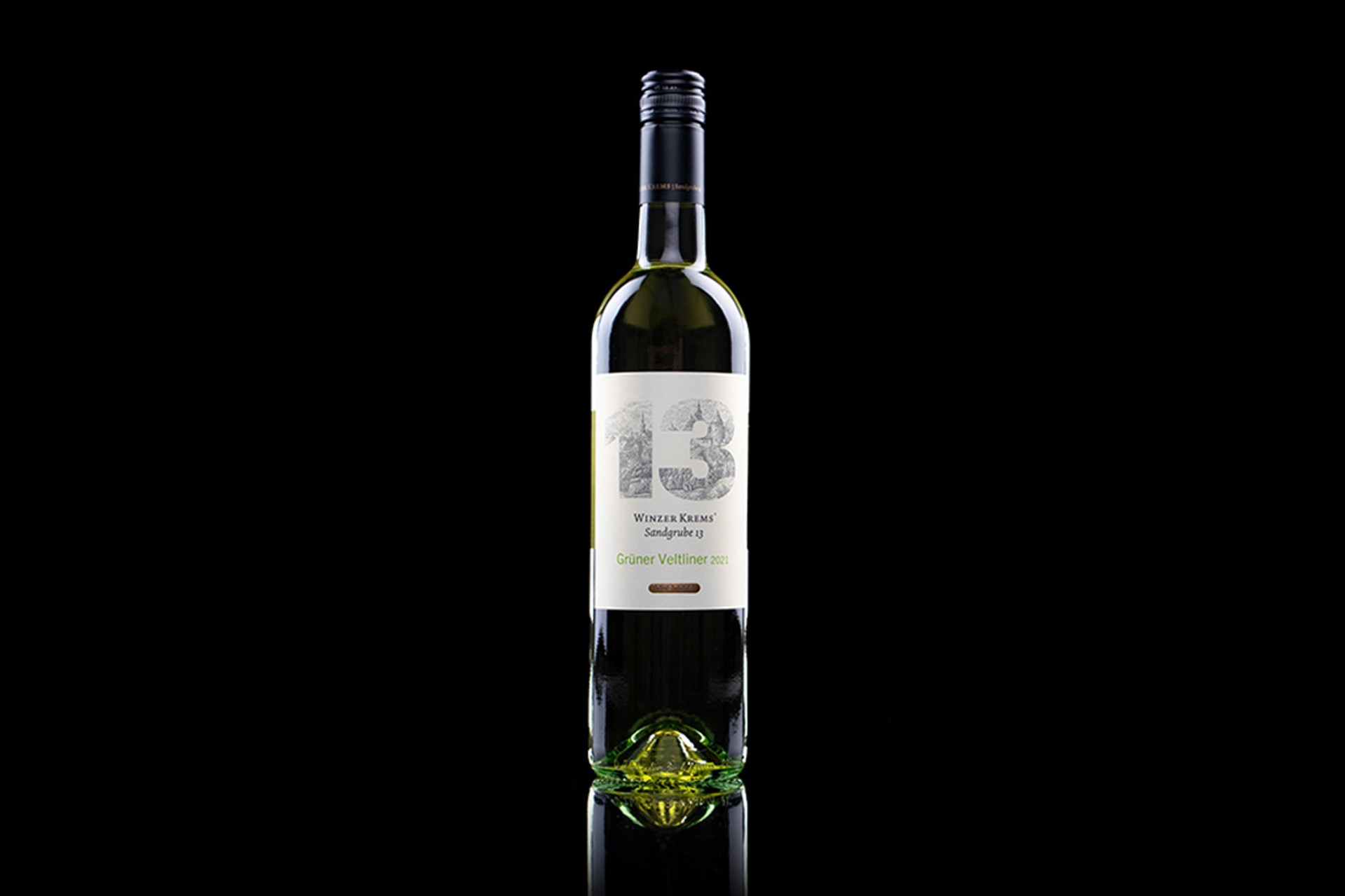
Part of the package: a new filling system
Winzer Krems also had a new bottling hall built specifically for this line. That allowed the old line to continue to operate until the new line was up and running – so production never stopped.
The new line went into operation in February 2022 and can fill up to 15,000 0.75-liter non-returnable glass bottles per hour – which is around 20 percent more than the previous line. But the capacity upgrade wasn't the main focus of this project. Further increasing quality was. Winzer Krems also place a great deal of emphasis on sustainability. As such, the new filling line – like the cellar – is powered by electricity generated on a 125-kilowatt peak (kWp) photovoltaic system and the power supply was switched from gas to district heating.
Ludwig Holzer finds that the new line is very quiet. And it achieved an efficiency of over 98 percent during acceptance testing. Winzer Krems opted to outsource the filling of the small share of wine that goes into returnable bottles. Now, the company is able to produce ten million non-returnable glass bottles in single-shift operation each year. "That means we also have some capacity for contract bottling," says Ludwig Holzer with a wink.
The new line in detail
It fills eleven different bottle formats ranging in volume from 0.25 to 1.0 liters and includes the following:
- Pressant Universal 1N sweep-off depalletizer
- Linatronic M empty-bottle inspector
- Stainless-steel-covered conveyor to the filler
- Rinser-filler-capper/corker block with a Moduljet rinser, Modulfill HRS filler, and two options for closing the bottles: aluminum screw caps and natural corks plus a capsule applicator*
- Checkmat FM-X inspector for checking fill level by way of x-ray
- Glideliner
- Linadry container dryer
- Autocol labeler with four stations for pressure-sensitive labels
- Checkmat E inspector for checking label placement
- Variopac Pro W packer
- Modulpal Pro 2AC palletiser
* Thanks to the two bottle-closing units, Winzer Krems is able to use PVC long-skirted screw caps, short-skirted MCA screw caps, or natural cork closures for upmarket vinotheque wines.
Many process and technology firsts
Pressure-sensitive labels
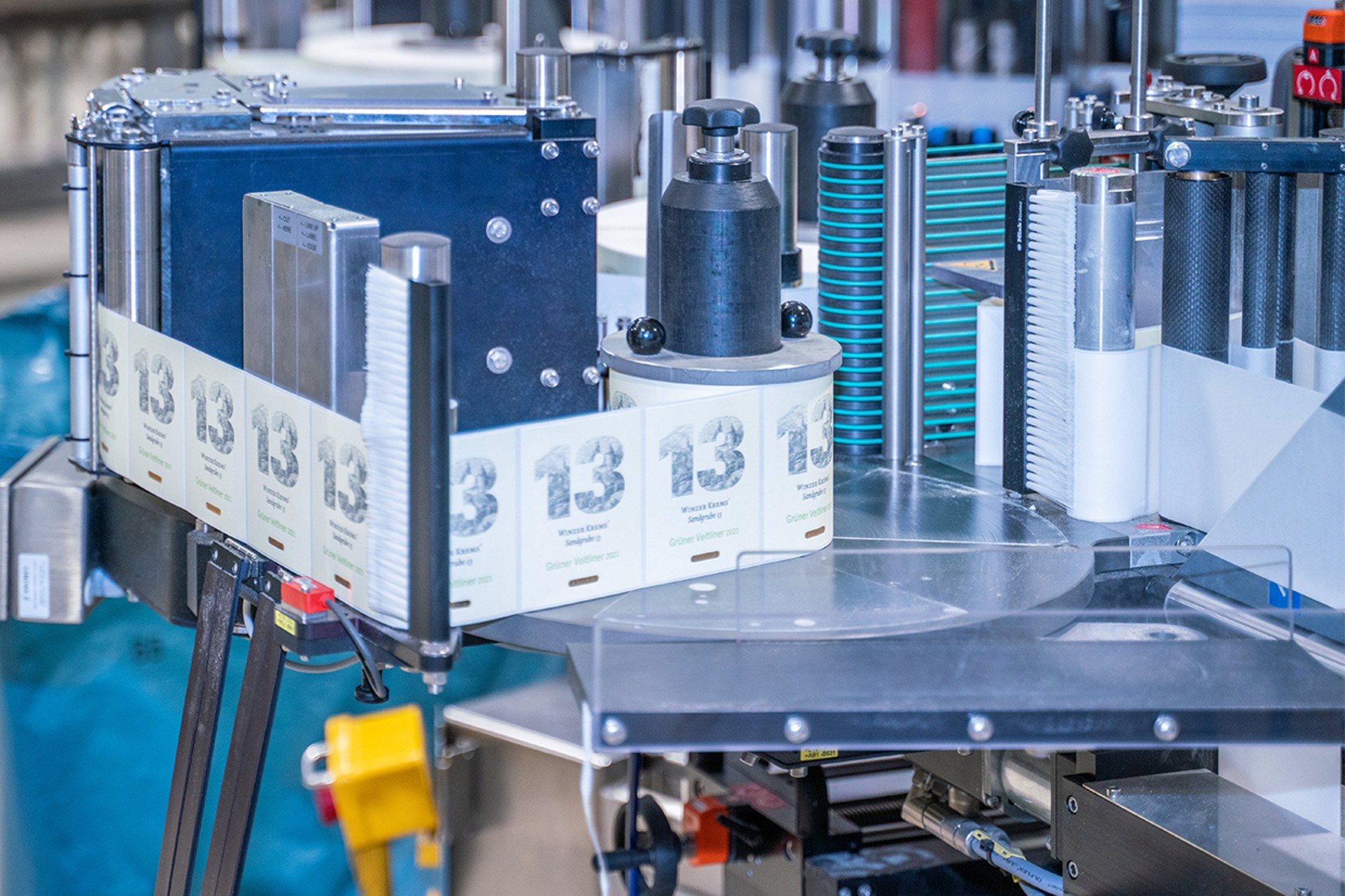
With the commissioning of the new line, Winzer Krems has switched over from traditional cold-glue labels to pressure-sensitive labels made of paper. Bottles will typically be dressed in a shoulder label and a back label, each applied by a dedicated labeling station. The two other labeling stations can be loaded with labels for the next fill order. That saves on changeover time since different export requirements necessitate frequent label changes – up to ten of them per day.
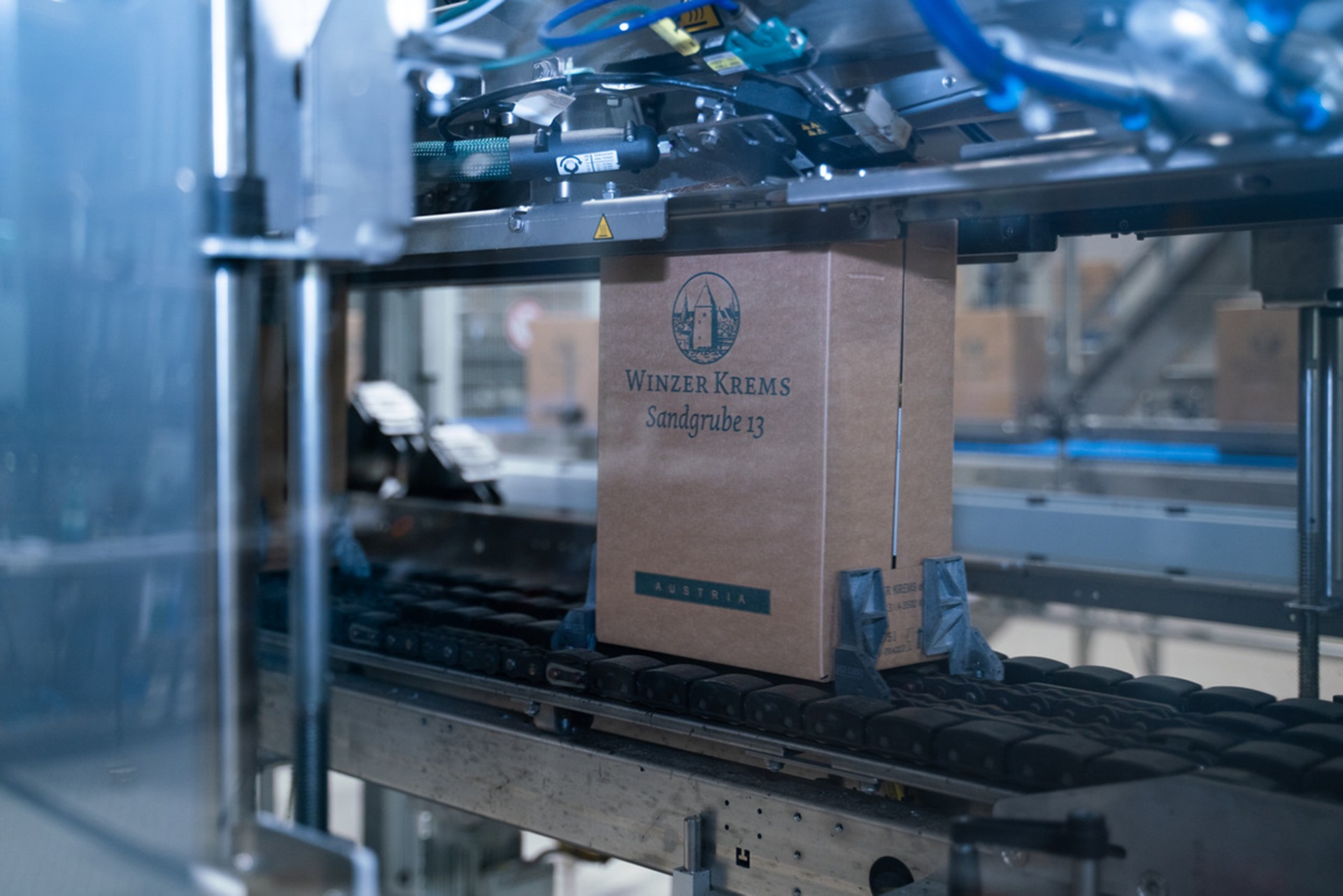
Wrap-around cartons
Bottles are now packed in wrap-around cartons instead of cardboard boxes – by way of a Variopac Pro W. "We use brown uncoated paperboard made of around 80 percent unbleached post-consumer material," says Holzer. "With that, we are supporting sustainability and saving on material with the wrap-around carton format."
MultiGuide Base clamping starwheels
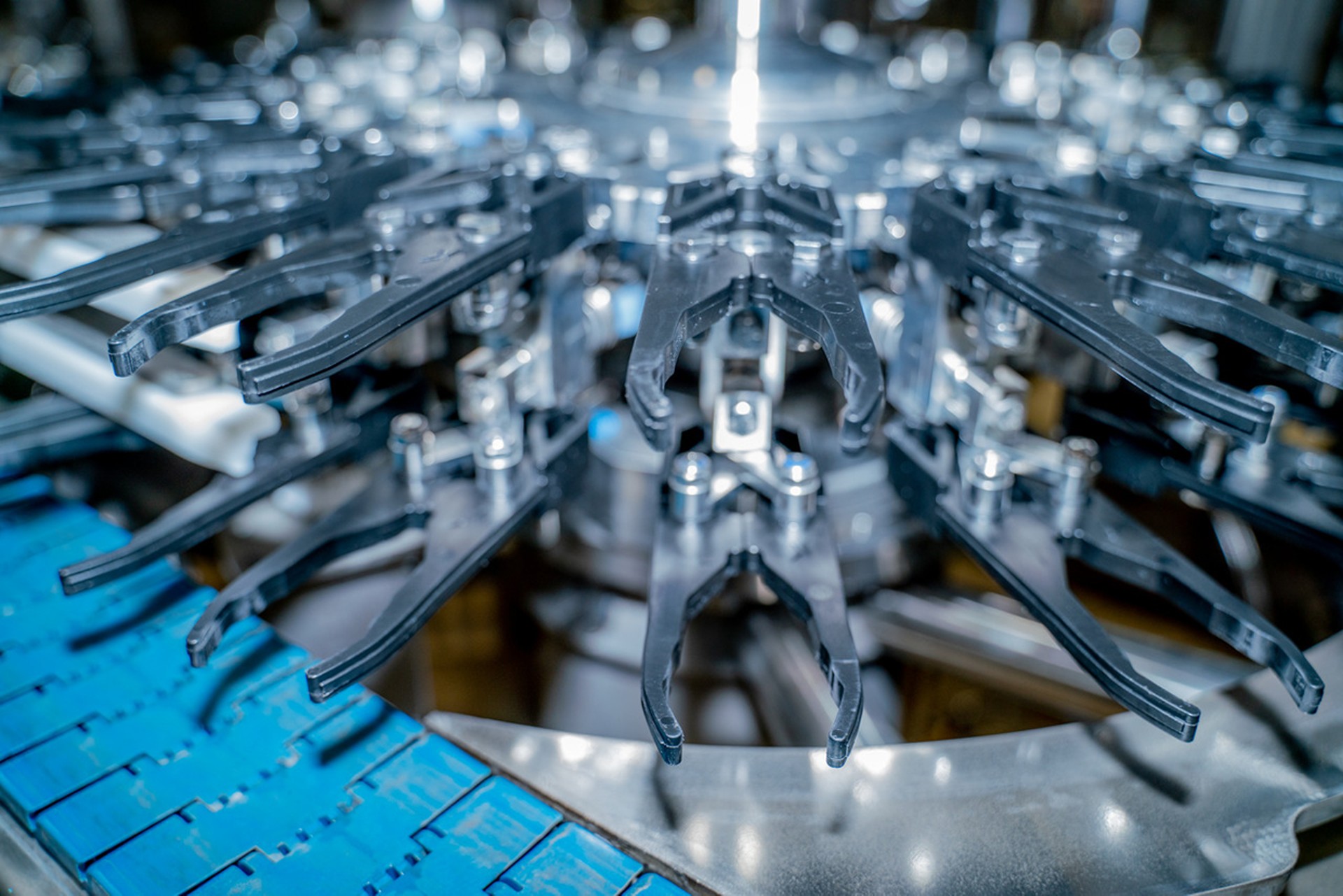
Another premiere – not only for Winzer Krems but also for Krones – lies within the filler. The line is one of the first to be equipped with the new MultiGuide Base clamping starwheel, a multifunctional starwheel that replaces all conventional handling parts and comes to grips with all of Winzer Krems' bottles. The biggest benefit is this: During changeovers, no more adjustments need to be made to the starwheels. The infeed worm at the rinser is the only part that needs to be replaced. As a result, the block can be made ready for the next batch in just five minutes or less.
UniPure product filtration system
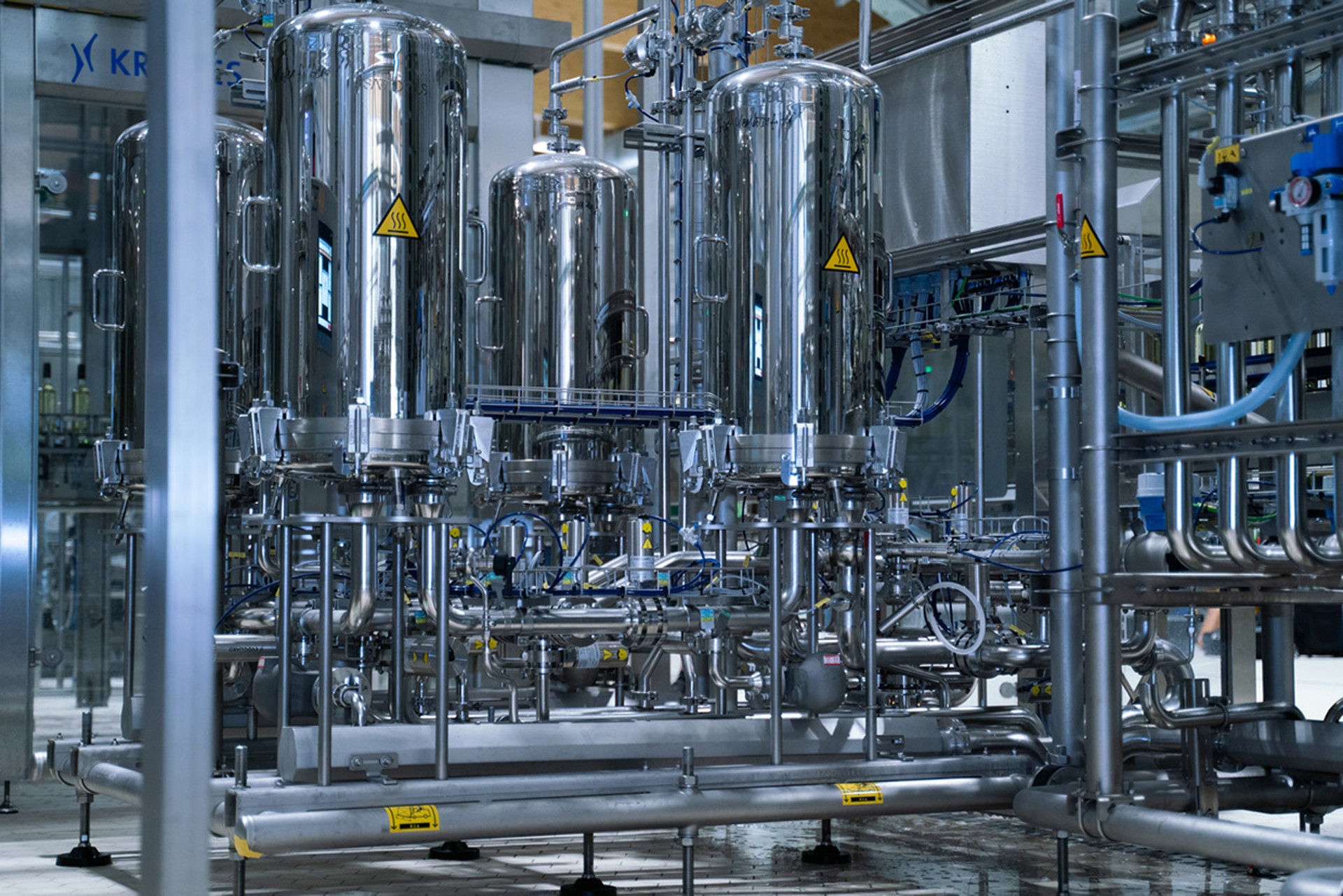
Winzer Krems wants its customers to enjoy wine that is pure, in the truest sense of the word. For that reason, Winzer Krems has now also installed a new product filtration system, switching over from layer filtration to membrane filtration using a candle filter. The UniPure filtration system removes undesirable particles, suspended matter and microorganisms. Krones put together this unit specifically for Winzer Krems (see box), a process made easier by the system's modular design.
"The UniPure system now stands directly adjacent to the filler," says Ludwig Holzer. "That gives us a highly compact layout with short product pathways. Our goal was to reduce the distance our wine travels from the cellar to the filler as much as possible." The installation of the wine filtration system upstream of the filler meant that Krones assumed overall responsibility for all filling and process technology on the project.
UniPure. The details.
- A product pump in the cellar transfers the crossflow-filtered wine to a coarse filter, which removes suspended and turbid matter.
- The product then moves into a buffer tank, where it can be warmed if necessary, and is then passed on to the main filter.
- The main filter is a fine filter, which removes yeasts and other product-spoilage organisms. It is designed for tandem operation, meaning that while one filter line is in operation, a second one is in standby mode. That allows for continuous production with one filter line while the other is being backflushed.
- After passing through the main filter, the wine then flows on to the filler. A carbonator is installed just ahead of the filler, which can be used as such for white wine or as a deaerator for red wine.
- In addition, an emptying station and rework tank make it possible to run improperly filled wine back through the filtration system.
Storage unit for chemicals and smart CIP
Krones has taken its efforts to be a one-stop shop a step further. Our subsidiary KIC Krones(opens external link in a new tab) delivers the entire range of chemicals needed for the VarioClean CIP (clean-in-place) system as well as the media for foam cleaning, conveyor lubrication, and chlorine-dioxide generation. Because we know: Krones runs best with Krones. "It was very important to us that we get everything from a single source," says Ludwig Holzer.
KIC Krones erected a storage unit for chemicals on one side of the filler to house the following components:
- Chlorine-dioxide generator, which supplies the rinser with highly concentrated chlorine dioxide (approx. 1.5 parts per million) for disinfection and also delivers low-concentration chlorine dioxide (approx. 0.2 parts per million) for the final-rinsing water in the rinser as well as the water for foam cleaning and the splinter washout system.
- Dosing pumps for providing the Krones CIP system with peracetic acid
- Dosing pumps for the foam cleaning system
- Conveyor lubrication system
Also on board: CIP process with intermittent dosing
Winzer Krems is also deploying a new CIP procedure developed by KIC Krones, which works on the principle of intermittent dosing into the acid tank. The disinfectant is added after the acid cleaning phase, so the disinfectant can do its work to optimal effect on a clean surface.
In intermittent dosing, the disinfectant is divided into three equal parts. Fresh disinfectant can always be added in precise quantities by way of a mass flow meter. A brief pause between each of the three dosage steps ensures proper mixing. This new procedure eliminates the need for a separate tank for disinfection. In addition, it makes for longer intervals between acid changes and fewer cleaning cycles for the acid tank.
Krones in two words: "commitment and flexibility"
If you ask Managing Director Ludwig Holzer to sum up the project, he's got a pretty clear response: "Our partnership with Krones is decades strong. And that made everything a bit easier in the face of challenging times of the covid-19 pandemic and supply chain disruptions. Krones' team always demonstrates incredible commitment and flexibility. I hate to think how everything would have gone if we hadn't chosen to work with Krones. After three and a half years of construction, we are still operating right on schedule. Without Krones, that wouldn't have been possible." And Ludwig Holzer knows what he's talking about: He himself has worked at Winzer Krems for 40 years – just as long as Krones lines have been bottling their wine.
Our partnership with Krones is decades strong. And that made everything a bit easier in the face of challenging times of the covid-19 pandemic and supply chain disruptions.
We value your opinion!
Feel free to join in our discussion on LinkedIn
Do you have any questions? Or would you like to share your thoughts on this subject with us? We welcome you to post your comments and remarks!
Hier geht's zum LinkedIn-Post(opens external link in a new tab)